
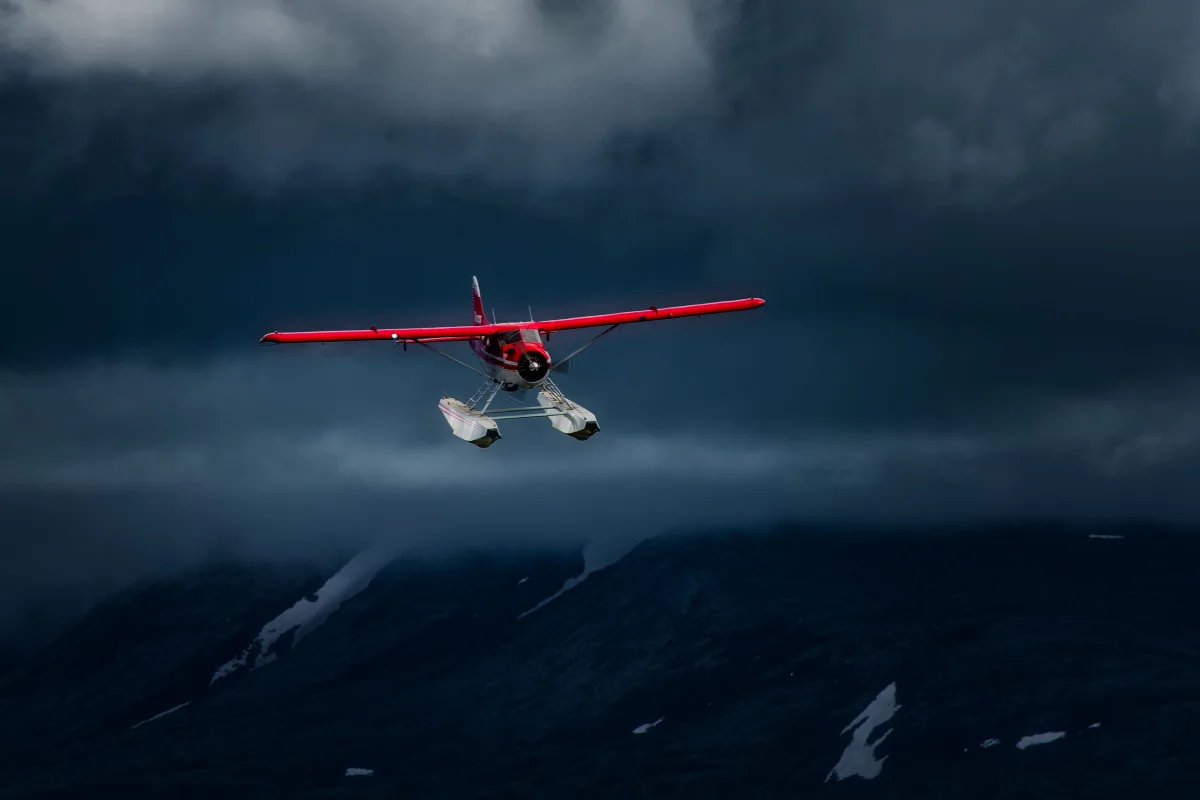
Flying from and on water: Floats vs. flying boats, seaplane ratings, best training locations, and why Europe is so restrictive.
Seaplanes -- Technology, Licensing, and Where You Can Still Fly Them in Europe
Seaplanes belong to one of the oldest and most romantic chapters of aviation history. Long before paved runways became the standard, water was the most natural runway in the world. Today, seaplane flying occupies a niche in Central Europe -- hampered by restrictive waterway regulations and a lack of infrastructure. But in Scandinavia, North America, and parts of Southern Europe, the seaplane remains an indispensable mode of transport. This article explains the technology behind floats and flying boats, the path to a seaplane rating under both EASA and FAA rules, and where in Europe you can still fly off the water.
Basic Types: Floatplanes vs. Flying Boats
Seaplanes fall into two fundamental categories that differ significantly in construction, flight characteristics, and purpose.
Floatplanes
A floatplane is essentially a conventional landplane in which the wheeled landing gear has been replaced by floats. This conversion is possible on many popular aircraft types and is performed using STCs (Supplemental Type Certificates).
Typical base aircraft for float conversions:
- Cessna 172 on floats: The quintessential floatplane. The 172's docile flight characteristics make it the ideal training aircraft on floats. The floats add approximately 287 lbs (130 kg) of empty weight and reduce cruise speed by about 10-15 knots.
- Cessna 185 Skywagon: With 300 HP and robust construction, this is the workhorse of North American bush flying. Can carry up to 1,320 lbs (600 kg) of useful load on floats.
- Cessna 206 Stationair: Six-seat aircraft with a large cargo door, ideal for transporting passengers and equipment to remote areas.
- Piper PA-18 Super Cub: Light two-seater with outstanding STOL performance, popular with bush pilots and for operations on small lakes.
- De Havilland DHC-2 Beaver: The legendary Canadian bush plane that, more than any other type, defines seaplane flying. The Pratt & Whitney R-985 radial engine producing 450 HP gives the Beaver unmatched short takeoff and landing capability.
Float types:
- Edo floats: The most widely used aluminum floats, rugged and low-maintenance
- Wipaire floats: Premium floats from the United States, available as straight floats or amphibious versions
- Aerocet floats: Composite floats, lighter than aluminum, offering improved performance
Flying Boats
In a flying boat, the fuselage itself is designed as a seaworthy hull. The fuselage serves simultaneously as the float. Flying boats are generally more aerodynamically efficient than floatplanes because the drag penalty of separate floats is eliminated.
Modern flying boats for general aviation:
- Icon A5: This American Light Sport Aircraft (LSA) two-seater has made seaplane flying accessible to a new generation. With a Rotax 912 iS engine (100 HP), folding wings, and a CAPS-style whole-aircraft parachute system, the A5 is a technological statement. The fuselage is a true flying boat hull with a step. New price: approximately $400,000.
- Lake Renegade (LA-250): A four-seat amphibious flying boat with a pusher propeller (Lycoming IO-540, 250 HP) that has been in production since the 1960s. The unusual engine placement above the fuselage keeps the propeller clear of spray. Cruise speed: 130 KTAS.
- Dornier Seastar: A twin-engine amphibious flying boat with turboprops, designed in Germany. An ambitious project that has gone through various development phases.
- Beriev Be-103: A Russian amphibious flying boat with two piston engines, built in small numbers.
Amphibious Aircraft -- the Best of Both Worlds
An amphibious aircraft can take off and land on both water and land. This is achieved either through amphibious floats (floats with retractable wheels) or through a retractable landing gear built into the flying boat hull.
The best-known amphibious aircraft:
- Cessna 206 on Wipaire amphibious floats: The most versatile configuration -- lands on any paved runway and on water
- Icon A5: Designed as an amphibian from the factory (retractable nosewheel)
- Lake Renegade: Retractable tricycle gear in the flying boat hull
- Grumman Widgeon / Goose: Historic American amphibians now flown as prized collectors' items
The greatest danger with amphibious aircraft is the infamous "gear-up water landing" (landing on water with the landing gear extended) and conversely the "gear-down land landing" (landing on a runway with the gear retracted). Both errors can have catastrophic consequences. Most amphibious aircraft therefore have audio and visual warning systems, and the checklist includes the critical item: "WATER -- Gear UP / LAND -- Gear DOWN."
"There are two kinds of amphibian pilots: those who have landed with the wrong gear configuration, and those who will." -- Old aviator's wisdom
Water Takeoff and Landing Technique
Taking off and landing on water differs fundamentally from operations on a hard surface. The water surface is dynamic, and the pilot must master techniques that do not exist in land-based flying.
Step-Taxi and Displacement-Taxi
Seaplanes use two basic taxiing techniques on the water:
- Displacement taxi: Slow taxiing at low propeller thrust. The aircraft displaces water like a boat. This method is used for maneuvering near docks, when mooring, and in speed-restricted areas. The nose is slightly raised.
- Step-taxi (planing): At higher speed (approximately 20-30 knots), the float lifts off the water surface and planes on the step -- a structural ledge on the underside of the float. The step breaks the suction of the water. Step-taxiing is significantly faster and is used for the transition to the takeoff run.
The Water Takeoff
The takeoff procedure on water follows a defined sequence:
- 1. Getting on the step: Apply full power and pull back slightly on the stick to raise the nose. At approximately 20 knots, the aircraft begins planing on the step. Then ease the stick forward to neutral or slightly forward to minimize drag.
- 2. Acceleration on the step: The aircraft now accelerates rapidly as water resistance drops dramatically. Caution: crosswind can push the aircraft sideways on the step -- be ready with rudder.
- 3. Liftoff: At rotation speed (typically 45-55 KIAS), rotate gently. The aircraft lifts off the water. Do not pull too early -- premature liftoff can result in settling back onto the water (porpoising).
The Water Landing (Alighting)
Landing on water requires particular attention to the condition of the water surface:
- Normal landing (in light wind): Approach as for a runway but with slightly increased speed (+5 KIAS). Touchdown is made in a slightly nose-up attitude, with the rear of the floats touching the water first. Pull back on the stick after touchdown to keep the nose up and use the braking effect of the water.
- Glassy water landing: The most dangerous situation for seaplane pilots. In absolutely calm conditions, the water surface is mirror-smooth (glassy), and the pilot cannot judge height above the water. The standard technique: fly a power-on approach at approximately 200 ft/min descent rate and set the aircraft onto the water with slight power. Never fly a normal power-off approach in glassy water conditions!
Porpoising
Porpoising is an oscillating motion of the aircraft on the water in which it alternately raises and lowers the nose -- similar to a leaping dolphin. Porpoising results from incorrect CG position, excessive speed, or imprecise control inputs. It can escalate rapidly and lead to a nose-over.
Countermeasure: At the onset of porpoising, immediately apply full power and go around. Never attempt to correct porpoising through counter-steering -- that makes the situation worse.
Additional Water Hazards
- Floating debris: Logs, buoys, and algae can cause significant damage on contact with the floats or propeller. Before every takeoff, inspect the planned takeoff lane from a boat or by flying a low pass.
- Current: On rivers, the current must be accounted for -- always take off and land into the current.
- Waves: High waves can overstress the float structure. Most floatplanes are certified for wave heights up to approximately 12 inches (30 cm, or 1 foot).
- Mooring and securing: Seaplanes must be properly secured at docks, buoys, or on shore. Wind and current can damage an unsecured aircraft.
The Seaplane Rating: the Path to a Water Flying Endorsement
The authorization to fly seaplanes is a class rating added to the PPL(A) or LAPL(A). In EASA nomenclature, it is designated as SEP(Sea) -- Single Engine Piston (Sea) -- or MEP(Sea) -- Multi Engine Piston (Sea). Under FAA rules, it is similarly a class rating added to the pilot certificate, designated as ASEL (Airplane Single-Engine Sea) or ASES depending on the configuration.
Training Scope
Training for the seaplane rating includes:
- Ground instruction: Seaplane-specific topics including hydrodynamics, water takeoffs and landings, glassy water techniques, water safety, waterway regulations, and legal requirements
- Flight training: Minimum 7 to 10 flight hours on a seaplane, typically covering:
- Taxiing (displacement and step-taxi)
- Normal water takeoff and landing
- Glassy water takeoff and landing
- Crosswind takeoffs and landings
- Takeoff and landing on rough water
- Docking and undocking
- Emergency procedures (engine failure over water, float leak)
- Safety drills (capsize drill on the ground)
- Checkride: Practical test with an examiner who holds the SEP(Sea) rating (EASA) or a designated examiner (FAA)
FAA seaplane rating: Under FAA rules, adding the ASES (Airplane Single-Engine Sea) class rating requires no minimum number of flight hours -- only demonstration of proficiency during a practical test. Most pilots complete the training in 5-10 hours. There is also no separate written exam required. This makes the FAA seaplane rating one of the most accessible add-on ratings available.
Seaplane Training Costs
| Training Location | Flight Hours | Cost | Typical Aircraft |
|---|---|---|---|
| Canada (Ontario, British Columbia) | 7 -- 10h | $3,300 -- $5,500 | Cessna 172 on floats, DHC-2 Beaver |
| Florida (USA) | 7 -- 10h | $3,850 -- $6,050 | Piper Super Cub, Cessna 172 |
| Alaska (USA) | 5 -- 10h | $3,000 -- $5,500 | Cessna 185, DHC-2 Beaver, Piper Super Cub |
| Scandinavia (Sweden, Finland) | 8 -- 12h | $5,500 -- $8,800 | Cessna 172/185 on floats |
| Croatia | 8 -- 10h | $5,500 -- $7,700 | Cessna 172 on floats |
| Scotland (Loch Lomond) | 8 -- 12h | $5,500 -- $8,800 | Cessna 172/206 on floats |
Training in North America is generally cheaper and faster, as seaplane infrastructure there is superbly developed. However, a rating obtained under FAA or Transport Canada rules must subsequently be validated onto an EASA license, which requires a conversion process through the national aviation authority (such as the LBA in Germany or the CAA in the UK). Many pilots complete their training in Canada or the U.S. and then have the rating recognized. Under FAA rules, EASA license holders can also obtain a standalone FAA certificate for flying in the United States.
Seaplane Flying in Europe -- Where It Is Still Possible
Scandinavia -- the Paradise of Seaplane Flying
In Sweden and Finland, seaplane flying is part of the living culture. With over 100,000 lakes in Finland alone and a long tradition of water-based aviation, these countries offer the best conditions in Europe:
- Sweden: Numerous seaplane bases (registered and unregistered), tolerant legislation, active seaplane community. The "Allemansratten" (Right of Public Access) permits, under certain conditions, takeoffs and landings on unregistered bodies of water.
- Finland: Similarly liberal regulations as Sweden. The Finnish lake district offers countless suitable bodies of water. In winter, frozen lakes are used for ski-equipped operations.
- Norway: Seaplanes are used along the fjords and coastline. Some commercial seaplane services still operate.
Scotland and Ireland
Loch Lomond Seaplanes in Scotland operates one of the few commercial seaplane services in Western Europe. From their base at Cameron House Estate, charter flights over the Scottish Highlands can be booked. Seaplane rating training is also offered there. The Scottish lochs provide ideal conditions: long, deep, and usually sheltered from wind.
Croatia and the Mediterranean
Croatia has invested increasingly in seaplane infrastructure in recent years. European Coastal Airlines operated a seaplane service along the Dalmatian coast (now discontinued), and there are ongoing efforts to resume seaplane traffic between the islands. The Croatian Adriatic coast, with its more than 1,000 islands, is ideally suited for seaplane operations.
Greece is also advancing the development of seaplane connections between its islands. The "Hellenic Seaplanes" project plans a network of seaplane harbors in the Aegean and Ionian seas.
France and Italy
In France, seaplane flying is possible on certain bodies of water but subject to strict approval procedures. Lake Annecy and Biscarrosse (a traditional seaplane location on the Atlantic coast) are well-known seaplane destinations. Biscarrosse also houses a notable seaplane museum.
In Italy, there are historical connections to seaplane flying (Lake Como was an important base), but active operations today are severely limited.
Why It Is Nearly Impossible in Germany, Austria, and Switzerland
In Germany, Austria, and Switzerland, seaplane flying has virtually ceased. The reasons are varied and frustrating for seaplane enthusiasts:
Germany:
- Waterway regulations: Landing on public waters is generally prohibited or requires a permit under the states' water protection laws. In practice, permits are almost never granted.
- Environmental protection: Many suitable lakes lie within nature reserves or bird sanctuaries (Natura 2000), where seaplane operations are excluded.
- Noise protection: Lawsuits by residents and environmental organizations have led to the closure of existing seaplane bases.
- No registered seaplane base: Germany currently has no officially registered seaplane base. Occasional special permits are issued for events or film productions.
Austria:
- Similarly restrictive legal framework as Germany. Austrian lakes are subject to strict environmental protection requirements.
- Historically, Lake Wolfgang (Wolfgangsee) was a seaplane base -- operations there have since ceased.
- Lake Constance (Bodensee) is occasionally used for seaplane events, but regular operations are not permitted.
Switzerland:
- FOCA (Federal Office of Civil Aviation) imposes strict requirements on seaplane operations. The federal constitution comprehensively protects waterways.
- Occasional special permits on certain lakes (e.g., Lake Lucerne for specific events).
- Switzerland has no permanent seaplane infrastructure.
Float Technology in Detail
Understanding float construction is important for every seaplane pilot:
The step: The step is a transverse ledge on the underside of the float, located approximately at the center of gravity. Its function is to break the suction of the water and reduce drag at high speed. Without the step, the aircraft would be unable to accelerate on the water.
Hull shape: The underside of the float has a V-shape (similar to a boat hull) that cushions the impact on landing and deflects spray to the sides. A steeper V-angle (deadrise angle) means softer landings but higher water resistance during takeoff.
Water rudders: Beneath each float is a small rudder (water rudder) that provides directional control while taxiing on the water. The water rudders are retracted before takeoff, as they could be damaged at high speed.
Compartments: Each float is divided into several watertight compartments. If one compartment is breached and floods, the aircraft remains buoyant. Before every flight, the pilot must check the compartments for water intrusion (via inspection hatches).
Struts and bracing: The floats are attached to the fuselage via struts and wires. These must be regularly inspected for play, corrosion, and correct tension.
Maintenance and Operating Costs of a Seaplane
The operating costs of a seaplane are higher than those of the equivalent landplane:
- Float maintenance: Annual float inspection, corrosion protection (especially critical in saltwater operations), watertightness testing of compartments
- Higher fuel consumption: The floats increase drag by approximately 20-30%, resulting in a corresponding increase in fuel burn
- Insurance: Seaplanes are more expensive to insure, as the risks (water damage, wind damage during mooring) are assessed as higher
- Parking: A seaplane requires either a waterside mooring (dock, buoy) or must be hauled out after each flight (slipway). Costs vary widely: $2,200 -- $6,600/year
- Saltwater corrosion: When operating in saltwater, the aircraft must be thoroughly rinsed with freshwater after every flight. Corrosion can significantly shorten the service life of the floats.
Recommended Path into Seaplane Flying
For pilots looking to get into seaplane flying, we recommend the following approach:
- Step 1: Obtain your PPL(A) (if not already held)
- Step 2: Complete seaplane training in Canada (Ontario or British Columbia) or the United States (Florida, Alaska, or the Pacific Northwest) -- the most cost-effective and efficient option. Ideally plan 2 weeks to also build solo experience after the rating.
- Step 3: Validate the FAA or Transport Canada rating onto your EASA license (through the LBA or national aviation authority), or maintain a separate FAA certificate for flying in the U.S.
- Step 4: Build seaplane experience in Scandinavia or Scotland
Alternatively, training can be completed directly at an EASA-approved flight school in Scandinavia, Scotland, or Croatia. This eliminates the validation process but is generally more expensive.
The Future of Seaplane Flying
Seaplane flying is experiencing an international comeback. New aircraft types like the Icon A5, electric seaplane projects, and growing interest in sustainable mobility for island and coastal regions are driving development. In Europe, electrification of seaplanes could help address the noise concerns that brought seaplane operations in Germany and Switzerland to a halt.
Projects such as Harbour Air's electric seaplane (Canada) and various European startups are developing zero-emission seaplanes that could open new possibilities for island transport in the Mediterranean and the North and Baltic seas. Whether this will lead to a renaissance of seaplane flying in Germany remains to be seen -- the regulatory hurdles remain formidable.
For passionate pilots, seaplane flying remains one of the most fascinating specializations in general aviation -- an experience that combines the freedom of flight with the beauty of the water. Anyone who has ever landed on a remote Canadian lake and experienced the silence after shutting down the engine will understand this fascination.
