
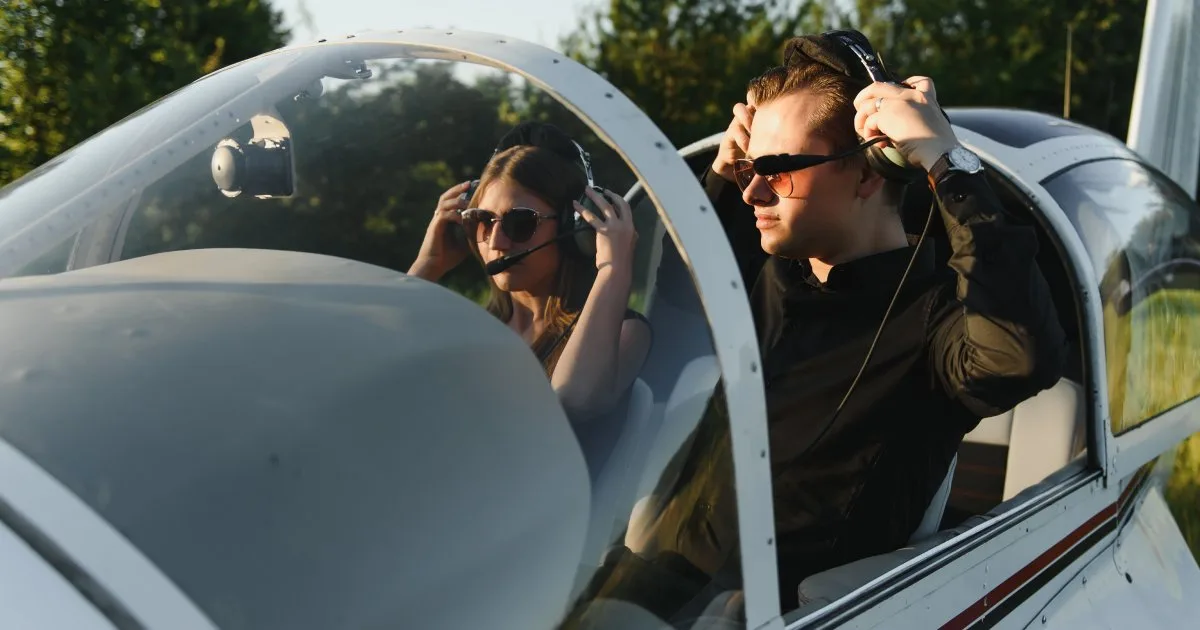
Ultralight aviation explained: License requirements, UL classes, weight limits, costs, and where the boundaries to powered flight lie.
Light Sport Aircraft -- Licensing, Aircraft Classes, and Restrictions
Ultralight and light sport aircraft have fundamentally transformed general aviation over the past three decades. What was once an experimental niche for tinkerers and adventurers is now the most affordable and accessible entry point into flying. In Germany alone, there are over 5,000 registered ultralight aircraft and around 30,000 active pilots, making it the fastest-growing category of powered aviation. In the United States, the equivalent Light Sport Aircraft (LSA) category has experienced a similar boom since the FAA introduced the Sport Pilot certificate in 2004. This article covers everything essential about ultralight and sport pilot licensing, the various aircraft classes, and the applicable restrictions under both EASA and FAA regulations.
What Is an Ultralight / Light Sport Aircraft?
The classification of light aircraft varies significantly between regulatory frameworks. In Europe, EASA (European Union Aviation Safety Agency) defines ultralight aircraft with a maximum takeoff mass (MTOM) of 600 kg (1,320 lbs), with a 22.5 kg (50 lb) allowance for aircraft equipped with ballistic recovery systems. EASA has approved raising this limit to 650 kg (1,433 lbs), which is being progressively implemented across member states, enabling safer and better-equipped ultralight aircraft.
In the United States, the FAA defines the comparable Light Sport Aircraft (LSA) category with a maximum takeoff weight of 1,320 lbs (600 kg), along with specific limits on maximum speed (120 knots), stall speed (45 knots in landing configuration), and passenger capacity (maximum 1 passenger). The FAA also maintains a separate "ultralight vehicle" category under FAR Part 103 for single-seat aircraft under 254 lbs empty weight that require no license at all -- a concept that has no direct equivalent in Europe.
"Light sport flying is the most democratic gateway to the sky -- affordable, technologically modern, and with a remarkable safety record."
Aircraft Classes at a Glance
Ultralight and light sport aircraft are divided into three main categories that differ fundamentally in construction, flight characteristics, and intended use.
Three-Axis Control Ultralight Aircraft
Three-axis ultralights look strikingly similar to modern light aircraft and fly much the same way. They are controlled via conventional control surfaces on all three axes: ailerons for the roll axis, elevators for the pitch axis, and rudder for the yaw axis. This category dominates the market with over 80 percent of all new registrations.
Typical examples include:
- Aerospool WT9 Dynamic -- All-metal low-wing from Slovakia, cruise speed up to 146 knots (270 km/h), one of the fastest ultralights available
- Comco Ikarus C42 -- High-wing with fabric covering, docile flight characteristics, the classic training aircraft in Germany
- Pipistrel Virus SW -- Slovenian high-performance ultralight built from composites, extremely fuel-efficient at under 2.6 gallons per hour
- B&F Funk FK9 -- German high-wing, solid build quality, good STOL characteristics
- Roland Aircraft Z-602 -- Low-wing with enclosed cabin, designed for sporty flying
- TL Ultralight TL-2000 Sting -- Czech low-wing, composite construction, outstanding performance figures
Trikes (Weight-Shift Control Ultralight Aircraft)
Trikes consist of a hang-glider-style wing and a motorized pod with landing gear. Control is achieved exclusively through weight shift, as the pilot moves the control bar relative to the wing. The flying experience is fundamentally different from conventional aircraft -- trike flying is more open, more immediate, and more weather-dependent.
Trikes are generally less expensive than three-axis ultralights and offer an intense flying experience. Cruise speeds typically range between 43 and 70 knots (80-130 km/h). Modern trikes such as the Air Creation Tanarg or the Airborne XT912 are equipped with powerful Rotax engines and can reach altitudes above 10,000 feet.
Gyroplanes (Autogyros)
Gyroplanes, also called gyrocopters or autogyros, are a fascinating hybrid between helicopters and fixed-wing aircraft. The free-spinning main rotor generates lift through autorotation, while a propeller at the rear provides thrust. The rotor is not actively driven but spins solely from the airflow -- a principle developed by Juan de la Cierva in the 1920s.
Modern gyroplanes such as the AutoGyro Cavalon or the AutoGyro MTOsport are extremely wind-stable, virtually stall-proof, and require very short takeoff and landing distances. Their cruise speed ranges between 70 and 92 knots (130-170 km/h). In Germany, gyroplanes are growing in popularity, with the company AutoGyro from Hildesheim dominating the global market.
Pilot Licensing: EASA SPL(A) vs. FAA Sport Pilot Certificate
The path to flying ultralight and light sport aircraft differs significantly between Europe and the United States.
In Europe, the license for ultralight aircraft in Germany is officially called the Sport Pilot License -- SPL(A). It is a national license issued by the German Aero Club (DAeC) or the German Ultralight Flying Association (DULV). Under EASA, the equivalent pan-European license is the LAPL(A) (Light Aircraft Pilot License), which covers aircraft up to 4,409 lbs (2,000 kg) MTOM.
In the United States, the FAA offers the Sport Pilot Certificate under 14 CFR Part 61 Subpart J. This allows pilots to fly FAA-certified Light Sport Aircraft (LSA) with significantly less training than a Private Pilot License (PPL). A key advantage of the FAA system is that Sport Pilot certificate holders can use a valid U.S. driver's license as a medical certificate instead of requiring an aviation medical exam, provided they have no known medical disqualifying conditions.
EASA SPL(A) Requirements
- Minimum age: 17 years (training may begin at 16, first solo flight at 16 with parental consent)
- Medical certificate: LAPL Medical (less stringent than Class 2)
- Background check: Federal criminal record extract
- First aid course: Proof required
- Radio license: BZF I (English) or BZF II (German)
FAA Sport Pilot Certificate Requirements
- Minimum age: 17 years (solo at 16)
- Medical: Valid U.S. driver's license or at least a third-class medical certificate
- Minimum flight hours: 20 hours total (vs. 30 hours for EASA SPL)
- Solo cross-country: At least one 75 NM cross-country with landings at two different airports
- English proficiency: Required for operations in U.S. airspace
Training Content and Scope (EASA SPL)
The ultralight training comprises theoretical and practical training:
Ground school (approximately 60-80 hours of instruction):
- Air law and aviation regulations
- Navigation
- Meteorology
- Aerodynamics and principles of flight
- Aircraft systems and powerplant
- Emergency procedures
- Human performance and limitations (Human Factors)
Flight training (minimum 30 hours):
- At least 5 hours of solo flight time
- Cross-country flights (at least 2 dual cross-country flights, one of which must cover at least 108 NM (200 km) with 2 intermediate landings at different airfields)
- 1 solo cross-country of at least 81 NM (150 km) with one intermediate landing
- Takeoffs and landings at various airfields
- Flight in unusual attitudes (slow flight, slips)
SPL(A) vs. LAPL(A) -- Understanding the Difference
A common point of confusion concerns the difference between the national SPL(A) and the European LAPL(A):
| Feature | SPL(A) -- UL License | LAPL(A) | FAA Sport Pilot |
|---|---|---|---|
| Validity | National (Germany) | All EASA member states | United States |
| Aircraft | UL up to 1,320/1,433 lbs | SEP up to 4,409 lbs MTOM | LSA up to 1,320 lbs |
| Minimum flight hours | 30 hours | 30 hours | 20 hours |
| Medical | LAPL Medical | LAPL Medical | Driver's license or 3rd class |
| Passengers | 1 (with endorsement) | Up to 3 | 1 |
| Training cost | $5,500 -- $8,800 | $8,800 -- $15,400 | $4,000 -- $8,000 |
| Upgradeable to PPL | No (new training required) | Yes (hours count toward PPL) | Yes (hours count toward PPL) |
Training Costs
The total cost for SPL(A) training in Germany and neighboring countries typically ranges between $5,500 and $8,800. This breaks down as follows:
- Ground school: $330 -- $660 (club training) up to $1,320 (commercial flight school)
- Flight hours (30h x $130-200/h): $3,960 -- $5,940
- Landing fees: $220 -- $440
- Examination fees (written + practical): $220 -- $385
- Aviation medical examination: $88 -- $165
- Study materials: $110 -- $275
- Radio license (BZF): $330 -- $550
In the United States, FAA Sport Pilot training typically costs between $4,000 and $8,000, with fewer required hours (20 vs. 30) and no mandatory radio license exam. Club-based training is generally significantly cheaper than commercial flight schools but may take longer due to limited availability of instructors and aircraft.
Restrictions of the Ultralight / Sport Pilot License
Both the EASA SPL(A) and the FAA Sport Pilot certificate carry important limitations that pilots need to understand:
Operational restrictions:
- VFR only: Ultralight and light sport aircraft may only be operated under Visual Flight Rules. Instrument flight (IFR) is not permitted, even if the aircraft is suitably equipped.
- No commercial operations: Ultralight aircraft may not be used for commercial purposes. Exceptions exist for training and towing operations in some jurisdictions.
- Passenger endorsement required: After earning the license, pilots may not carry passengers immediately. An additional passenger endorsement requires at least 10 hours PIC time after license issue and an instructor sign-off (EASA). Under FAA rules, Sport Pilots need to log specific experience before carrying passengers.
- No night flights (EASA): Ultralight flights are only permitted during daylight hours (sunrise to sunset) under EASA rules. Note that the FAA Sport Pilot certificate also restricts night flying unless additional training and endorsements are obtained.
- Limited geographic validity (EASA SPL): The German SPL(A) is only valid in Germany. Flights abroad require bilateral agreements, which exist with many European countries (e.g., France, Austria, Czech Republic). The FAA Sport Pilot certificate is valid throughout U.S. airspace.
Technical restrictions:
- Maximum takeoff mass 1,320 lbs (or 1,433 lbs under EASA update)
- Maximum 2 seats
- Stall speed maximum 35 knots (45 knots for FAA LSA)
- Fixed landing gear on older models (retractable gear now permitted on some newer certifications)
Airfields and Infrastructure
Ultralight aircraft are generally permitted to use all approved airfields -- from international airports to small private strips. In practice, ultralight operations concentrate on:
- Small regional airports: Smaller, uncontrolled fields with grass or paved runways, often with a UNICOM or CTAF frequency
- Private airstrips: Often grass strips with minimal infrastructure, ideal for ultralights with short takeoff and landing distances
- Dedicated ultralight fields: Specially designated areas operated by flying clubs
Germany has approximately 500 airfields and landing strips approved for ultralight operations. In the United States, thousands of airports and airstrips accommodate LSA operations. Many clubs maintain their own fields with hangar facilities, workshops, and an active social scene. Annual hangar costs for an ultralight typically range between $880 and $2,750, depending on region and facilities. In the U.S., tie-down or T-hangar costs vary widely from $1,200 to $6,000 per year.
Popular Ultralight / LSA Aircraft in Detail
The ultralight and LSA market offers an impressive variety of aircraft today. Here is a comparison of the most popular models:
| Model | Type | Engine | Cruise Speed | Fuel Consumption | New Price from |
|---|---|---|---|---|---|
| WT9 Dynamic | Low-wing, metal | Rotax 912 ULS (100 HP) | 135 kts | 4.2 gal/h | $104,500 |
| Comco Ikarus C42 | High-wing, fabric | Rotax 912 UL (80 HP) | 94 kts | 3.4 gal/h | $71,500 |
| Pipistrel Virus SW | High-wing, composite | Rotax 912 ULS (100 HP) | 130 kts | 2.4 gal/h | $121,000 |
| FK9 Mk VI | High-wing, fabric/metal | Rotax 912 UL (80 HP) | 100 kts | 3.7 gal/h | $77,000 |
| AutoGyro Cavalon | Gyroplane | Rotax 914 UL (115 HP) | 86 kts | 5.3 gal/h | $93,500 |
The Rotax Engine: the Heart of the Ultralight Fleet
Over 80 percent of all ultralight aircraft worldwide are powered by Rotax engines manufactured by Austria-based BRP-Rotax. The Rotax 912 series is widely regarded as one of the most reliable aircraft engines ever produced, with a TBO (Time Between Overhaul) of 2,000 hours and an outstanding operational record.
The key variants are:
- Rotax 912 UL (80 HP): The standard engine for training and touring ultralights
- Rotax 912 ULS (100 HP): Higher-output version for faster ultralights
- Rotax 914 UL (115 HP, turbocharged): For high-performance ultralights and gyroplanes
- Rotax 915 iS (141 HP, turbonormalized): The latest engine with electronic fuel injection
All Rotax 912 series engines can run on unleaded automotive gasoline (MOGAS, 91 octane or higher) or Avgas 100LL, and feature an integrated reduction gearbox for propeller drive.
Safety in the Ultralight / LSA Segment
Safety statistics in the ultralight sector have improved considerably over the past 20 years. A key factor in Europe is the Ballistic Recovery System (BRS), which is mandatory for all ultralight aircraft in Germany. This system deploys a parachute in an emergency, lowering the entire aircraft and its occupants safely to the ground. Since its introduction, BRS has demonstrably saved hundreds of lives. In the United States, BRS is not mandatory for LSA but is increasingly popular, particularly in aircraft like the Cirrus SR-series and many LSA models.
The accident rate per 100,000 flight hours in the ultralight sector is now comparable to that of certified single-engine aircraft. The most common accident causes remain human factors: misjudging weather conditions, inadequate flight planning, and controlled flight into terrain (CFIT).
Annual Operating Costs
Beyond the acquisition cost, ultralight pilots should be aware of ongoing expenses:
- Hangar rental: $880 -- $2,750/year
- Insurance (liability + hull): $660 -- $1,650/year
- Annual inspection: $330 -- $660
- Fuel (at 50h/year): $1,100 -- $1,980/year
- Engine maintenance reserve: $550 -- $1,100/year
- Miscellaneous (oil, wear parts): $220 -- $550/year
Overall, annual operating costs for a privately owned ultralight run approximately $3,850 to $8,250, plus the variable hourly flying costs. In a club or partnership arrangement, costs can be significantly reduced through shared ownership models.
The Future of Light Sport Aviation
The future of the ultralight and LSA segment is promising. The raising of the EASA weight limit to 1,433 lbs opens new possibilities for safer and more comfortable aircraft. At the same time, manufacturers like Pipistrel (now part of Textron Aviation) are driving electrification forward -- the Pipistrel Velis Electro is already the first EASA-certified electric aircraft and is being used for training.
The digitalization of the cockpit has also reached the ultralight segment. Modern glass cockpits with EFIS (Electronic Flight Instrument System), integrated GPS, and moving maps are now standard even in the ultralight class. ADS-B transponders and electronic collision avoidance devices (FLARM) further enhance safety. In the U.S., the FAA's modernized MOSAIC rule (announced in 2024) promises to expand the definition of LSA, potentially allowing heavier, faster, and retractable-gear aircraft to be flown under the Sport Pilot certificate.
For newcomers, ultralight and light sport flying remains the most attractive path into the world of general aviation: comparatively affordable, technically advanced, and supported by a vibrant community of clubs, associations, and fly-ins. Anyone looking to fulfill the dream of flight will find the best entry point in the ultralight and LSA segment.
