
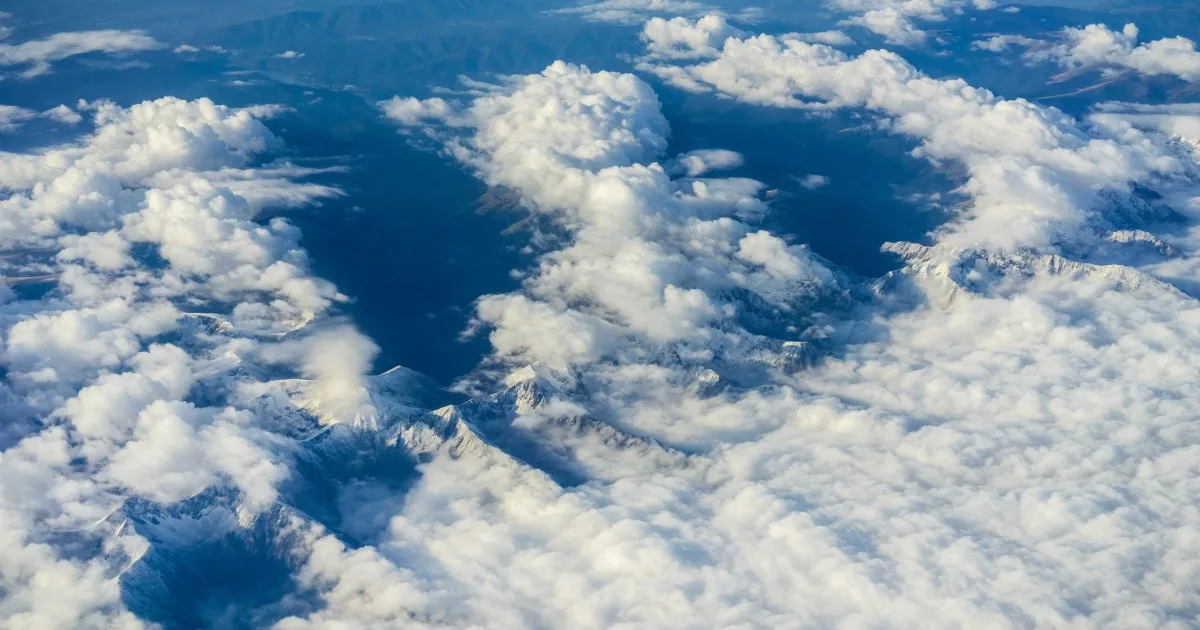
Flying in high mountains: Density altitude, valley wind systems, emergency landing options, and why mountain flying training saves lives.
Mountain Flying -- Hazards, Training, and Routes in the Alps
The Alps are one of the most breathtaking flying regions in the world -- and one of the most demanding. Mountain flying confronts pilots with challenges that simply do not exist in the flatlands: reduced engine performance at altitude, treacherous valley wind systems, limited emergency landing options, and terrain that does not forgive mistakes. At the same time, an Alpine flight ranks among the most unforgettable experiences general aviation has to offer. This article explains the physics behind the hazards, the proper training, proven flight routes, and the common errors that must be avoided.
Density Altitude -- Why Your Engine Struggles in the Mountains
The single most important concept in mountain flying is density altitude. It describes the altitude in the standard atmosphere at which the air density matches the actual air density at your location. Put simply: the engine and the wings "think" they are higher than the altimeter reads.
Density altitude is influenced by three factors:
- Field elevation: The higher the airport, the lower the air density
- Temperature: Higher temperatures further reduce air density. For every 10 degrees Celsius (18 degrees Fahrenheit) above ISA, density altitude rises by approximately 600 ft
- Barometric pressure (altimeter setting): Lower pressure increases density altitude
Rule of thumb for performance loss: A naturally aspirated engine loses approximately 2 percent of its rated power for every 1,000 ft of altitude. This means a Lycoming O-360 rated at 180 HP at sea level produces only about 160 HP at Samedan airport (LSZS, 5,600 ft) in the Swiss Engadin. On a hot summer day at 86 degrees Fahrenheit (30 degrees Celsius), the density altitude there can easily exceed 8,000 ft -- leaving only about 150 HP available. For comparison, pilots flying out of high-altitude airports in the western United States (such as Leadville, Colorado at 9,934 ft or Telluride at 9,070 ft) face even more severe density altitude challenges.
Practical examples:
| Scenario | Elevation | Temperature | Density Altitude | Performance Loss |
|---|---|---|---|---|
| Hamburg (EDDH) | 53 ft | 59 F / 15 C (ISA) | 53 ft | ~0% |
| Innsbruck (LOWI) | 1,907 ft | 59 F / 15 C | ~1,900 ft | ~4% |
| Innsbruck (LOWI), summer | 1,907 ft | 90 F / 32 C | ~4,200 ft | ~8% |
| Samedan (LSZS), summer | 5,600 ft | 82 F / 28 C | ~8,400 ft | ~17% |
| Courchevel (LFLJ) | 6,588 ft | 77 F / 25 C | ~9,000 ft | ~18% |
Consequences of high density altitude:
- Longer takeoff roll (up to 50% more than at sea level)
- Reduced rate of climb (can drop below 300 ft/min -- in a valley, this may not be enough to clear the next ridge)
- Higher true airspeed at the same indicated airspeed (stall speed in IAS remains the same, but groundspeed during landing is higher)
- Propeller efficiency decreases as well (the propeller works less efficiently in thinner air)
Valley Wind Systems -- the Invisible Hazard
Mountains generate complex wind patterns that go far beyond simple updrafts and downdrafts. Understanding these systems is vital for the mountain pilot.
Thermal Valley Wind Systems
On sunny days, Alpine valleys develop a characteristic valley wind system that follows the diurnal cycle:
- Morning (after sunrise): Solar radiation heats the mountain slopes faster than the valley floor. Warm air rises along the slopes (anabatic wind / upslope wind). Air flows in from the valley to replace it, creating a valley breeze (wind blows up-valley).
- Afternoon: The valley wind system reaches maximum intensity. Slope updrafts can reach 600-1,000 ft/min (3-5 m/s), and the up-valley wind blows at 8-16 knots (15-30 km/h).
- Evening (after sunset): The slopes cool, cold air sinks downslope (katabatic wind / downslope wind). The valley wind reverses and now blows down-valley (mountain breeze). This effect can intensify during the night.
Foehn (Chinook)
The foehn -- known as the chinook in the Rocky Mountains of North America -- is a downslope wind that occurs when moist air flows over a mountain range. On the windward side, the air rises, cools, and precipitation falls. On the leeward side, the now-dry air descends and warms -- at approximately 5.4 degrees Fahrenheit per 1,000 ft of descent (3 degrees Celsius, dry adiabatic lapse rate). The result: warm, dry downslope winds with speeds up to 80 knots (150 km/h).
Foehn/chinook hazards for pilots:
- Extreme turbulence: Especially on the lee side, in the foehn wall, and in rotors
- Rotors: Cylindrical vortices that form on the lee side near the ground. Rotors can produce vertical speeds exceeding 2,000 ft/min up and down and are extremely dangerous for light aircraft
- Mountain waves (lee waves): Standing waves in the atmosphere that can extend for hundreds of miles. Lenticular clouds (lens-shaped "foehn fish") are a reliable indicator
- Foehn wall: Dense cloud cover on the windward side of the ridge that prevents passage
"In the mountains, there is no such thing as bad wind -- only pilots who do not know what the wind is doing." -- Old mountain pilot's maxim
Flight Routes Through the Alps
The Alps are not crossed at random. There are established standard routes that have developed over time and offer the most favorable terrain and weather conditions. The most important routes for general aviation:
Inn Valley Route (East-West)
The Inn Valley Route runs from Innsbruck (LOWI) along the Inn Valley westward toward the Arlberg Pass and onward into Switzerland. It is one of the most frequently used VFR routes in the Alps and offers relatively wide valleys with good diversion options. The minimum en-route altitude in the Inn Valley is approximately 5,500 ft MSL, while the valley floor sits at around 2,000 ft.
Brenner Route (North-South)
The Brenner Route is the classic north-south Alpine crossing and, with a pass elevation of just 4,511 ft (1,374 m), the lowest crossing between Innsbruck and Bozen/Bolzano. The route follows the Wipp Valley from Innsbruck southward, crosses the Brenner Pass, and continues through Sterzing/Vipiteno into the Eisack/Isarco Valley to Bozen/Bolzano (LIPB).
Advantages: Relatively low pass elevation, wide valley, good infrastructure (highway as navigation reference). Disadvantages: Strong turbulence on the south side during north foehn; narrow sections near Matrei.
Rhone Valley Route (West)
From Geneva (LSGG), the Rhone Valley Route follows the Rhone Valley eastward and provides access to the Simplon Pass (6,590 ft) or the Great St. Bernard Pass (8,100 ft). The Rhone Valley is one of the widest Alpine valleys and offers comparatively comfortable flying conditions. However, strong valley winds develop here in the afternoon.
Additional Important Routes
- Julier/Maloja Route: From Zurich via Chur and the Julier Pass (7,493 ft) to Samedan and the Engadin -- demanding due to altitude
- Arlberg Route: From Innsbruck over the Arlberg Pass (5,883 ft) into the Rhine Valley toward Vorarlberg/Switzerland
- Reschen Pass Route: From Innsbruck over the Reschen Pass (4,948 ft) into the Vinschgau/Val Venosta -- alternative to the Brenner
- Fern Pass Route: Innsbruck -- Reutte -- Garmisch, low-level route along the Inn and over the Fern Pass
Mountain Flying Training
In both Europe and the United States, mountain flying is recognized as a specialized discipline requiring additional training beyond the standard PPL syllabus.
In Europe: Austria and Switzerland offer formalized mountain flying courses. Many flight schools in the Alps provide specialized mountain flying courses that are highly recommended (though not legally required for VFR flight) for anyone planning to fly in mountainous terrain.
In the United States: The FAA does not require a mountain flying endorsement, but numerous flight schools in Colorado, Idaho, Montana, and other western states offer mountain flying courses. Organizations like the Mountain/Canyon Flying Safety Foundation provide specialized training. The FAA strongly recommends mountain flying instruction in Advisory Circular AC 61-124, "Tips on Mountain Flying."
Mountain Flying Courses in Austria
The Austrian Aero Club and various flight schools offer structured courses typically comprising:
- Ground school (4-8 hours): Density altitude, valley wind systems, foehn, route planning, emergency procedures, mountain weather
- Flight training (5-10 hours): Flying in various valley types, pass crossings, steep turns (canyon turns in narrow valleys), short-field takeoff and landing techniques, emergency landing practice
- Locations: Innsbruck (LOWI), Zell am See (LOWZ), Lienz (LOLT)
- Cost: $1,650 -- $3,850 depending on scope and aircraft type
Mountain Flying Courses in Switzerland
Switzerland offers some of the most challenging mountain airfields in the world and correspondingly high-quality training programs:
- Samedan (LSZS): At 5,600 ft, one of the highest airports in Europe, an ideal training location for high-altitude operations
- Saanen-Gstaad (LSGK): In the Bernese Oberland, a classic mountain airfield
- Flight schools: Multiple providers with FOCA-certified courses
- Cost: $2,200 -- $4,400
Emergency Landing Options in the Mountains
In flat terrain, an emergency landing following engine failure is stressful but manageable -- there is almost always a field, meadow, or road within gliding distance. In the mountains, the situation is entirely different. Steep slopes, narrow valleys, rocky terrain, and forests dominate. The options for a successful forced landing are drastically limited.
Strategies for an emergency:
- Always fly within gliding distance of a landing area: The golden rule of mountain flying. Plan your route so that you are never more than 5 minutes' glide from a potential landing surface.
- Use the valley floor: Fly over the valley floor whenever possible, not at mid-slope height. The valley floor is more likely to offer meadows, roads, and airfields.
- River beds as emergency landing surfaces: Wide river beds (such as the Inn or Rhone) can serve as emergency landing areas.
- Alpine meadows: High-altitude alpine pastures may offer a usable surface in some cases, but they are often steeply sloped and short.
- Best glide speed: Know your aircraft's best glide speed by heart and be able to establish it immediately.
Planning an Alpine Crossing
An Alpine crossing requires thorough planning. Here are the key steps:
1. Route selection:
- Verify that pass elevation is within the aircraft's performance capability (maintain at least 2,000 ft above pass height!)
- Consider valley width and turning possibilities
- Define alternative routes in case the planned route is blocked by weather
2. Weather:
- Study GAFOR reports (General Aviation Forecast) for the Alpine region -- these specifically indicate VFR weather conditions in mountain sectors
- Rule out foehn conditions (look for lenticular clouds, strong pressure gradient across the Alps)
- Factor in thermal development (cumulus clouds may obscure passes in the afternoon)
- Prefer morning flights (more stable atmosphere, better visibility, less thermal turbulence)
3. Minimum altitudes:
- At least 1,000 ft above the highest obstacle within 5 NM on either side of the route
- For pass crossings: at least 2,000 ft above pass elevation to maintain sufficient altitude reserve for downdrafts on the lee side
- Observe semicircular rules: select flight altitudes based on magnetic course
4. Alternates:
- Always plan at least one alternate airport on each side of the ridge
- Turnaround decision: Define the "point of no return" before the pass, beyond which a safe turnaround is no longer possible
Common Mistakes in Mountain Flying
Accident statistics in mountain flying reveal recurring patterns. The most frequent errors:
- "Get-there-itis": The compulsion to press on despite deteriorating conditions instead of turning back. In the mountains, this mindset can be fatal.
- Insufficient altitude over the pass: Crossing with only 500 ft above the ridge may seem adequate, but downdrafts on the lee side can quickly push the aircraft below ridge height -- with no room to turn back.
- Attempting a turn in a narrow valley: In a V-shaped valley, the aircraft's turning radius may exceed the valley width. Many fatal accidents result from attempting to turn in a valley that is too narrow. Rule of thumb: If you doubt whether you can turn, it is already too late.
- Flying on the wrong side of the valley: In the mountains, always fly on the right side of the valley (as seen in the direction of flight), to leave room for opposing traffic and to allow a turn toward the valley floor in an emergency.
- Underestimating density altitude: A takeoff from a high-altitude airfield at 86 degrees Fahrenheit requires significantly more runway than at sea level. The POH (Pilot's Operating Handbook) must be consulted.
- Afternoon Alpine crossings: Thermal development in the afternoon can obscure passes with cumulus clouds and generate severe turbulence. Mountain flights should ideally be conducted in the morning.
Key Alpine Airports
| Airport | ICAO | Elevation | Runway Length | Notable Features |
|---|---|---|---|---|
| Innsbruck | LOWI | 1,907 ft | 6,562 ft (2,000 m) | Controlled, mountain approach, mandatory VFR routes |
| Samedan (Engadin) | LSZS | 5,600 ft | 5,906 ft (1,800 m) | Highest airport in Europe, special procedures |
| Zell am See | LOWZ | 2,470 ft | 3,281 ft (1,000 m) | Grass runway, spectacularly scenic |
| Bozen/Bolzano | LIPB | 789 ft | 4,593 ft (1,400 m) | South side of Brenner, tight surroundings |
| Locarno | LSZL | 650 ft | 4,429 ft (1,350 m) | Ticino, south side of the Alps |
| Courchevel | LFLJ | 6,588 ft | 1,762 ft (537 m) | Steepest runway in Europe (18.5% grade), special authorization required |
| Megeve | LFHM | 4,823 ft | 1,749 ft (533 m) | French Alps, short sloped runway |
Innsbruck (LOWI) -- the Classic Alpine Airport
Innsbruck airport deserves special mention as it is the most frequently visited controlled Alpine airfield by VFR pilots. The approach procedures are demanding:
- Mandatory VFR routes: VFR traffic must follow defined routes (e.g., Route North, Route East via Wattens, Route West via Zirl)
- Reporting points: Mandatory position reports along the routes (e.g., "Kranebitten," "Zirl Bridge")
- One-directional runway operations: Runway 08/26 lies within the Inn Valley; takeoffs are typically to the west (Runway 26), landings from the west (Runway 26)
- PPR: VFR traffic at Innsbruck frequently requires Prior Permission Required (PPR)
Equipment Recommendations for Mountain Flying
- ICAO 1:500,000 charts: Indispensable for visual navigation in the mountains
- GPS with terrain display: Moving map with Terrain Awareness provides obstacle warnings
- FLARM/ADS-B: Traffic awareness device -- encounters with gliders and other VFR aircraft can be sudden in narrow valleys
- Supplemental oxygen: Recommended for pass crossings above 10,000 ft (not required below 10,000 ft under EASA rules; FAA requires supplemental oxygen above 12,500 ft for more than 30 minutes)
- Warm clothing: At 10,000 ft, temperatures can be below freezing even in summer -- essential if the cabin heater fails or in the event of an off-airport landing
- Emergency equipment: ELT (Emergency Locator Transmitter), first aid kit, personal locator beacon (PLB) recommended
Conclusion
Mountain flying is not an arcane art, but it demands respect, training, and thorough preparation. Pilots who understand the physics of density altitude, can read valley wind systems, and abide by the golden rule of mountain flying -- when in doubt, turn back -- will be rewarded with unforgettable flight experiences. Seeing the Alps from the cockpit of a light aircraft is among the finest things aviation has to offer. Invest in solid mountain flying training -- it is one of the best investments in your flying safety and proficiency.
