
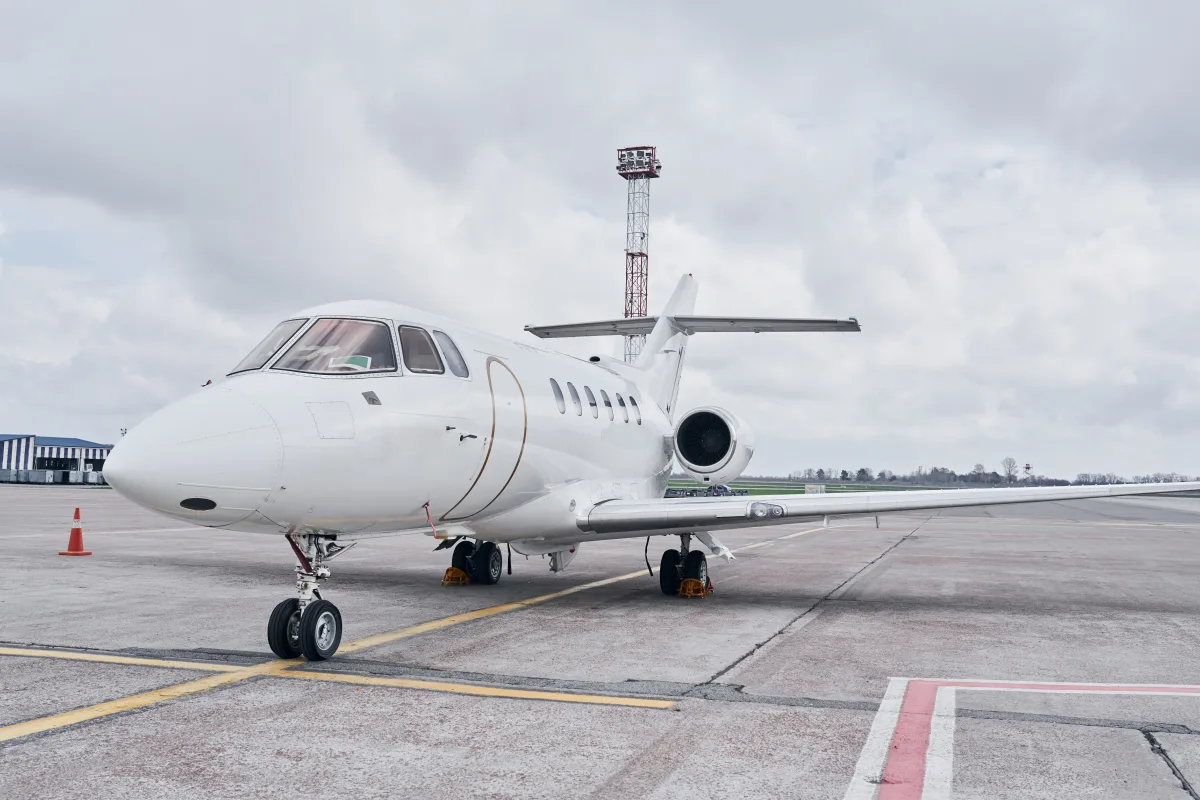
Stans, Switzerland — a small village on Lake Lucerne. Pilatus Aircraft has been building aircraft here since 1939. The PC-7 turboprop trainer, the PC-12 — the world's best-selling single-engine turboprop — and since 2018: the PC-24, the first jet from Pilatus. And what a jet it is.
Pilatus PC-24 — Technical Specifications
- Powerplant: 2 × Williams FJ44-4A (16.0 kN thrust each)
- Range: 3,993 km (2,155 nm) at typical load
- Maximum Speed: 815 km/h (Mach 0.74)
- Max. Altitude: 45,000 ft
- Takeoff Roll: 800 m on grass, 730 m on paved runway (MTOW)
- Cabin: 8–10 passengers, width 1.57 m, height 1.52 m
- List Price: approx. USD 11M (2024)
The Unique Selling Point: The Jet That Lands on Grass
What sets the PC-24 apart from every other business jet is its unique ability to operate from short, unpaved runways. With an 800 m takeoff roll on grass, it opens up a world of destinations simply unreachable for conventional jets — highland airstrips in Kenya, alpine runways in Austria, private farm strips in Australia.
This is no theoretical capability. Pilatus deliberately developed the PC-24 for these missions and extensively tested it in Africa and Latin America. The robust landing gear structure and sophisticated flap system come directly from PC-12 experience.
The Cabin — Surprisingly Spacious for Its Class
For a light jet, the PC-24 has an unusually wide cabin — its cross-sectional profile is more akin to a midsize jet. The cabin can be configured in numerous layouts: from the classic VIP version with individual seats and club-four arrangement to the cargo door version (rear right), which also accommodates stretchers or Euro boxes.
The cargo door is not a secondary feature — it's a design objective. In rescue and disaster relief operations, medical evacuations, or technical equipment transport, it makes the PC-24 unrivaled.
Avionics: Garmin G3000
The cockpit is based on the Garmin G3000 Integrated Flight Deck — three large touchscreens, SVT (Synthetic Vision Technology), TCAS II, ADS-B In/Out, RNP AR capable. For a light jet in this category, it's state-of-the-art. The G3000's user-friendliness is undisputed in the industry — many pilots rate it higher than significantly more expensive proprietary systems.
Market Position and Order Books
Pilatus has delivered over 150 PC-24s (as of early 2025) and holds orders for 80+ more. This makes it the most successful newly certified European business jet program in the past 20 years. Lead time for new orders stands at 3–4 years.
The pre-owned market is correspondingly tight: first-generation PC-24s (2018–2020) trade at 75–85% of the new price — well above the industry average. This also makes it one of the most attractive business jets in its class from a value retention perspective.
The Pilatus PC-24 is not a compromise — it's a deliberate design decision for a specific mission: the comfort and speed of a jet combined with the accessibility of a turboprop. Those who fly this mission will find nothing comparable on the market.
For the European market, it's particularly interesting: short alpine runways, private airstrips in France and Spain, medical flights in Scandinavia — the PC-24 can do what no other jet can.
