
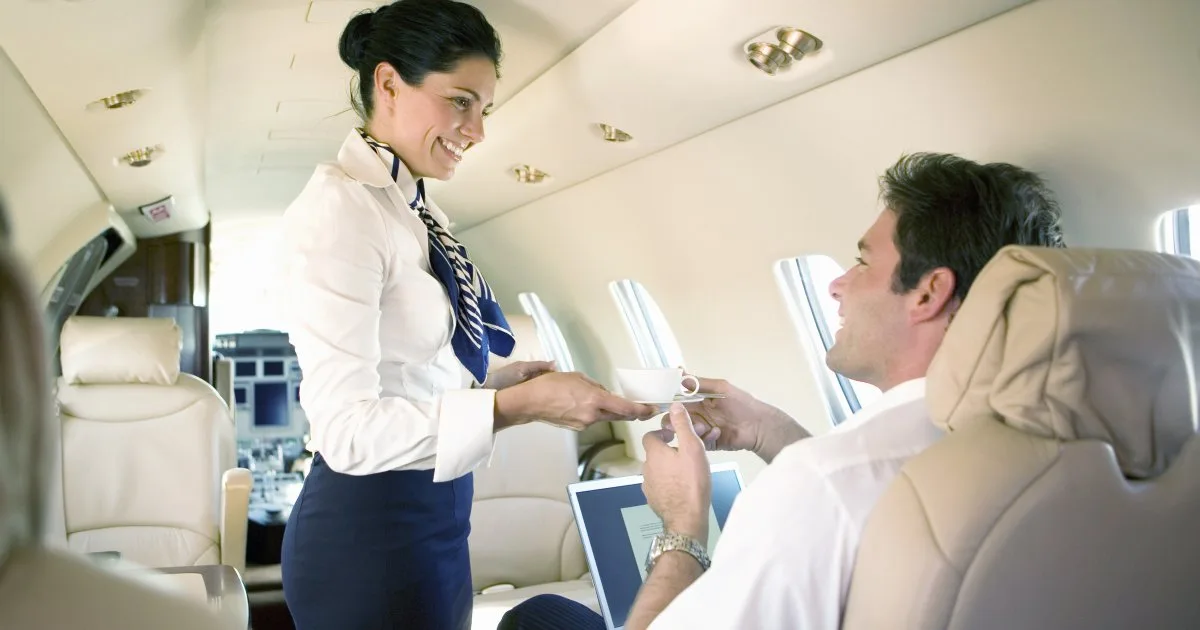
Business aviation for decision-makers: Charter from $3,500/hour, purchase from $3.5M, fractional from $600K — when each model makes economic sense.
Charter vs. Buy vs. Fractional Ownership — What Makes Financial Sense
Whether to charter a private jet, buy one outright, or participate in a fractional ownership program is one of the most important financial decisions in business aviation. Each option has specific advantages, disadvantages, and break-even points. In this article, we analyze all three models — plus the increasingly popular jet cards — and show at what utilization level each model makes economic sense.
Option 1: Charter — Flexibility Without Commitment
Chartering is the simplest way to access private jet travel. You book an aircraft for a specific route, pay for the flight, and have no further obligations. The charter market in North America and Europe is highly developed, with hundreds of operators and a broad fleet across all aircraft categories.
Charter Costs by Aircraft Category
| Category | Typical Aircraft | Cost per Hour | Pax |
|---|---|---|---|
| Turboprop | PC-12, King Air 350 | $2,000 – $3,100 | 6–9 |
| Very Light Jet | Phenom 100, Citation M2 | $2,750 – $3,850 | 4–5 |
| Light Jet | Phenom 300, Citation CJ3+ | $3,850 – $5,500 | 6–8 |
| Midsize Jet | Citation XLS+, Learjet 75 | $4,950 – $7,150 | 7–9 |
| Super-Midsize Jet | Challenger 350, Citation Longitude | $6,600 – $9,350 | 8–10 |
| Large Cabin Jet | Challenger 650, Falcon 900 | $8,250 – $12,100 | 10–14 |
| Ultra-Long-Range | Global 7500, Gulfstream G700 | $11,000 – $17,600 | 12–19 |
The listed costs are gross charter rates and typically include crew, fuel, maintenance, and insurance. Not usually included are: landing fees, handling fees, catering, de-icing, and any crew overnight costs on multi-day trips. These additional costs can amount to $550 to $2,200 per flight.
Advantages of Chartering
- No capital commitment: No multi-million-dollar purchase required.
- No fixed costs: If you don't fly, you don't pay.
- Aircraft selection on demand: A VLJ for the short hop, an ultra-long-range for the transatlantic trip — always the right aircraft for the mission.
- No management burden: No worry about maintenance, crew, hangar space, or regulatory compliance.
- Rapid availability: Established charter brokers can often source aircraft within 4 to 12 hours.
Disadvantages of Chartering
- No guarantee: During peak periods (holidays, major events), availability can be limited.
- No personalization: You fly in someone else's aircraft with varying equipment and crew.
- Price fluctuations: Seasonal demand, fuel prices, and positioning legs significantly affect pricing.
- Highest per-flight cost: Per flight hour, charter is the most expensive option.
Empty Legs: The Bargain Opportunity
Empty legs (repositioning flights or deadhead legs) occur when a charter aircraft must return to its home base after dropping off passengers or reposition to the next pickup location. These flights are offered at discounts of 30 to 75 percent off the regular charter price.
For the flexible traveler who can compromise on dates and routes, empty legs are an attractive way to fly private. The limitations: these flights are often available on short notice (24–72 hours ahead), the route is fixed, and changes are not possible. Additionally, the empty leg can be canceled at short notice if the charter customer changes their return itinerary.
Option 2: Ownership — The Ultimate Solution
Buying your own jet is the ultimate solution for frequent flyers who demand maximum control, availability, and personalization. However, it is also the option with the highest total cost and greatest management responsibility.
Acquisition Costs
Acquisition costs vary enormously by aircraft type, age, and condition:
| Aircraft Type | New Price ($ million) | Pre-Owned 5–10 Years ($ million) |
|---|---|---|
| Cirrus Vision SF50 | 2.9 | 1.8 – 2.4 |
| HondaJet HA-420 | 5.4 | 3.5 – 4.5 |
| Citation CJ4 | 9.5 | 5.0 – 7.5 |
| Phenom 300E | 10.5 | 7.0 – 9.0 |
| Challenger 350 | 27.0 | 15.0 – 22.0 |
| Global 7500 | 73.0 | 45.0 – 60.0 |
Annual Fixed Costs: The Underestimated Factor
The fixed costs of a business jet accrue regardless of whether the aircraft flies or not. They range from $220,000 to $550,000 per year depending on type — or over $1,100,000 for large cabin jets:
| Cost Category | Light Jet (approx.) | Super-Midsize (approx.) | Large Cabin (approx.) |
|---|---|---|---|
| Crew (2 Pilots) | $132,000 – $198,000 | $198,000 – $308,000 | $275,000 – $440,000 |
| Hangar | $20,000 – $40,000 | $40,000 – $79,000 | $66,000 – $132,000 |
| Insurance (Hull + Liability) | $27,500 – $55,000 | $66,000 – $132,000 | $110,000 – $275,000 |
| Maintenance Program (Fixed) | $16,500 – $33,000 | $33,000 – $66,000 | $55,000 – $110,000 |
| Recurrent Training (Crew) | $11,000 – $22,000 | $22,000 – $44,000 | $33,000 – $66,000 |
| Navigation/Charts/Subscriptions | $5,500 – $11,000 | $8,800 – $16,500 | $11,000 – $22,000 |
| Management Fee | $16,500 – $33,000 | $33,000 – $66,000 | $66,000 – $132,000 |
| Total Fixed Costs/Year | $220,000 – $385,000 | $396,000 – $715,000 | $616,000 – $1,177,000 |
On top of these come the variable costs per flight hour (fuel, variable maintenance, landing fees, handling), which run from $880 to $5,500 per hour depending on type.
Depreciation: The Invisible Cost
Business jets are subject to significant depreciation. New aircraft typically lose 25 to 40 percent of their value in the first 5 years. A new Challenger 350 at $27 million may be worth $16 to $19 million after 5 years — a value loss of $8 to $11 million, or $1.6 to $2.2 million per year.
For tax purposes, this depreciation can be leveraged. In the United States, Section 168 bonus depreciation has historically allowed accelerated write-offs for business aircraft. Under IRS rules, the useful life of a business jet is typically 5 to 7 years for MACRS depreciation. Consult a tax professional specializing in aviation for current provisions, as rules vary by jurisdiction and change frequently.
Option 3: Fractional Ownership — The Middle Ground
Fractional ownership is a model in which multiple owners each purchase a share of an aircraft — typically 1/16 (50 hours/year), 1/8 (100 hours/year), 1/4 (200 hours/year), or 1/2 (400 hours/year). The fractional provider manages the entire fleet and guarantees the owner access to an aircraft of their category — not necessarily "their" aircraft, but an equivalent one.
Major Fractional Providers
NetJets
NetJets, a Berkshire Hathaway subsidiary, is the world's largest fractional provider, operating in North America and Europe. The fleet comprises over 800 aircraft worldwide, including Citation XLS+, Phenom 300E, Challenger 350, Global 6000, and Bombardier Global 7500.
- Share sizes: 1/16 to 1/2
- Guaranteed availability: 10 hours' notice (4 hours for Marquis Card holders)
- Contract term: Typically 5 years
- Cost (example 1/16 Citation XLS+): Acquisition approx. $600,000 + monthly management fee approx. $13,200 + variable costs approx. $3,300/hr
VistaJet
VistaJet pursues a somewhat different model: rather than selling shares, VistaJet offers a subscription program where the customer commits to a fixed number of flight hours per year. VistaJet owns and operates the entire fleet (Bombardier Global and Challenger jets).
- No capital commitment: No share purchase required
- Program fee: Annual base fee + hourly rate
- Global coverage: Over 200 aircraft worldwide
- Cabin size: Focus on large cabin and ultra-long-range
Advantages of Fractional Ownership
- Guaranteed availability: Unlike charter, an aircraft is always available — contractually guaranteed.
- Lower capital commitment: A 1/16 share requires only a fraction of the full investment.
- No management burden: The fractional provider handles crew, maintenance, insurance, regulatory compliance, and operations.
- Consistent quality: Same aircraft type, same equipment, trained crew to uniform standards.
- Residual value participation: At the end of the contract term, the share is bought back at current market value.
Disadvantages of Fractional Ownership
- High entry costs: Even a 1/16 share costs several hundred thousand to over a million dollars.
- Monthly fixed costs: Management fees are due regardless of utilization.
- Depreciation risk: The share is subject to market value — in a market downturn, the buyback value can be significantly below the purchase price.
- Long-term commitment: Contracts typically run 3 to 5 years.
- Availability within category only: A Phenom 300 share guarantees a light jet — but possibly a Citation XLS or Learjet 75 may be substituted, rather than a Phenom 300.
Option 4: Jet Cards — The Flexible Compromise
Jet cards are a relatively new concept that combines the flexibility of charter with the guaranteed availability of fractional ownership. The customer purchases a block of hours (typically 25, 50, or 100 hours) at a fixed hourly rate and can draw on this allocation within a defined period (usually 12 months).
Typical Jet Card Terms
| Provider | Category | Hourly Rate (approx.) | Minimum Volume |
|---|---|---|---|
| NetJets Marquis | Light to Ultra-Long-Range | $4,950 – $15,400 | 25 hours |
| VistaJet Program | Super-Midsize to Ultra-Long-Range | $8,800 – $17,600 | 50 hours |
| Wheels Up | Light to Large Cabin | $4,200 – $9,900 | 25 hours |
| Sentient Jet | Light to Heavy | $4,500 – $14,000 | 25 hours |
Jet cards offer price transparency (fixed hourly rate, no surprises), guaranteed availability (typically 8–24 hours' notice), and no long-term capital commitment. The downside: hourly rates are typically 10 to 30 percent higher than ad-hoc charter, as the availability guarantee is priced in.
The Break-Even Analysis: When Does Buying Make Sense?
The central question can be answered mathematically. The break-even point — where ownership becomes cheaper than chartering — depends on the aircraft type and utilization intensity:
| Aircraft Category | Break-Even vs. Charter (approx. hr/year) | Break-Even vs. Fractional (approx. hr/year) |
|---|---|---|
| VLJ / Light Jet | 200 – 300 hours | 250 – 350 hours |
| Midsize Jet | 250 – 350 hours | 300 – 400 hours |
| Super-Midsize Jet | 300 – 400 hours | 350 – 450 hours |
| Large Cabin Jet | 350 – 450 hours | 400 – 500 hours |
Rule of thumb: If you fly fewer than 50 hours per year, charter is your best bet. Between 50 and 200 hours, a jet card or fractional share offers the optimal balance of cost and availability. Above 200 to 400 hours annually, ownership becomes economically attractive — provided you can handle the capital commitment.
Management Companies: The Owner as Invisible Operator
Owners who purchase a jet but cannot or prefer not to manage the operation themselves use an aircraft management company. These firms handle the entire operation under an AOC (Air Operator Certificate, required under EASA) or Part 135 certificate (under FAA), managing:
- Crew recruitment, management, and training
- Maintenance planning and execution
- Regulatory compliance (EASA, FAA, or other national authorities)
- Flight planning and dispatch
- Insurance administration
- Accounting and cost reporting
Management fees typically run $16,500 to $33,000 per month for a light jet and $33,000 to $88,000 per month for a large cabin jet. Many management companies offer to charter the aircraft during periods when the owner is not using it. Charter revenues can significantly offset ongoing costs — in good years by 30 to 60 percent of fixed costs.
Reputable management companies:
- Jet Aviation (Basel/Zurich) — Part of the General Dynamics group, global network
- ExecuJet (global) — Part of the Luxaviation group
- Clay Lacy Aviation (Los Angeles, multiple U.S. locations) — Established U.S. management leader
- Solairus Aviation (U.S.) — Growing independent management firm
- DC Aviation (Stuttgart, Germany) — Specialist in large cabin jets, VIP completions
Tax Considerations
The tax treatment of a business jet varies significantly by jurisdiction and usage profile. Key considerations include:
- United States: Business use may qualify for accelerated depreciation under MACRS (Modified Accelerated Cost Recovery System), typically over 5–7 years. Bonus depreciation provisions (Section 168) have historically allowed significant first-year write-offs. State sales and use tax vary widely. Personal use must be carefully tracked and may trigger tax consequences under IRS entertainment disallowance rules.
- European Union (EASA states): VAT implications on acquisition and operation vary by member state. Import VAT may apply. Business use deductions are subject to national tax codes. The Isle of Man and Malta registrations are commonly used for VAT optimization.
- Globally: Cross-border operations introduce additional complexity around cabotage rules, customs, and bilateral agreements.
Important: Expert tax advice from an aviation-specialized tax professional is essential before purchasing a business jet. The interaction of sales tax, income tax, import duties, and cross-border regulations is highly complex.
Decision Matrix
| Criterion | Charter | Jet Card | Fractional | Ownership |
|---|---|---|---|---|
| Capital Required | None | Low | Medium | High |
| Fixed Costs | None | Low | Medium | High |
| Availability | Good | Guaranteed | Guaranteed | Always (your aircraft) |
| Personalization | None | None | Limited | Full |
| Ideal For | <50 hr/year | 25–150 hr/year | 50–300 hr/year | >200–400 hr/year |
Conclusion
The choice between charter, jet card, fractional ownership, and full ownership is not a matter of taste but of math and mission profile. Occasional flyers with fewer than 50 hours per year are well served by charter. Regular users (50–200 hours) find the optimal balance of cost and availability in jet cards and fractional programs. And frequent flyers logging over 200 to 400 hours annually can achieve better economics through ownership — ideally with an experienced management company and charter revenue offset. The key is an honest assessment of your actual flight needs, a rigorous cost analysis, and the willingness to seek professional advice.
