
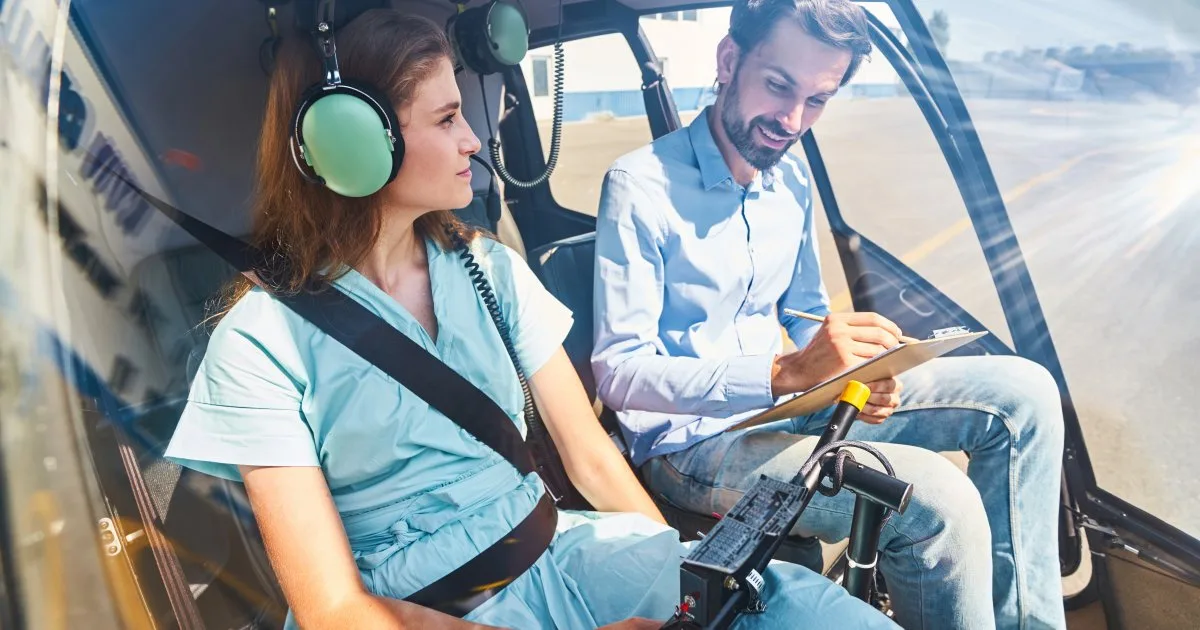
Private Pilot License: From choosing a flight school through training phases to the practical checkride. What it really costs and how long it takes.
The Path to a Private Pilot License -- What Aspiring Pilots Should Really Expect
The Private Pilot License is the gateway to general aviation. In the EASA system, the PPL(A) authorizes you to fly single-engine piston aircraft under Visual Flight Rules (VFR) and serves as the foundation for additional ratings such as night flying, instrument flying, or the commercial license. In Europe, EASA (European Union Aviation Safety Agency) governs all training, examination, and license revalidation requirements through Regulation (EU) No 1178/2011 (Part-FCL). In the United States, the equivalent is the FAA Private Pilot Certificate, governed by 14 CFR Part 61, with broadly similar training requirements but some notable differences in structure and cost.
Prerequisites: What You Need Before You Start
Before you book your first flight lesson, several formal requirements must be met. The minimum age to begin training is 16, and the license itself can be issued at age 17 (same under both EASA and FAA rules). A mandatory prerequisite is an aviation medical certificate -- under EASA, this is a Class 2 Medical issued by an AME (Aeromedical Examiner); under FAA rules, at least a Third-Class Medical (or BasicMed) is required. You should have your medical certificate in hand before your first solo flight, ideally before you even begin training. It would be frustrating to discover a medical limitation after you have already invested time and money in flight hours.
In Europe, you also need a radio operator's certificate. While this is handled as part of the pilot certificate in the United States, EASA member states may require a separate radio telephony license (such as the BZF I for English-language radio communication in Germany). If you plan to fly internationally -- and every pilot should aspire to -- English-language radio proficiency is essential.
Choosing the Right Flight School: ATO vs. DTO (EASA) and Part 61 vs. Part 141 (FAA)
In Europe, there are two types of flight training organizations:
| Criterion | ATO (Approved Training Organisation) | DTO (Declared Training Organisation) |
|---|---|---|
| Approval | Full certification by aviation authority | Declaration filed with the authority |
| Training scope | PPL, CPL, IR, type ratings | PPL, LAPL, class ratings |
| Structure | Strict, standardized syllabus | Flexible, often club-based |
| Cost | Tends to be higher | Often more affordable (club structure) |
| Typical | Commercial flight schools | Flying clubs, aero clubs |
In the US, the equivalent distinction is between Part 141 flight schools (structured, FAA-approved syllabus, minimum 35 hours) and Part 61 training (flexible, instructor-led, minimum 40 hours). For a straightforward PPL, both EASA paths produce the same license. Club-based schools (DTO) often offer lower hourly rates and a welcoming atmosphere. Commercial ATOs deliver professional infrastructure, structured curricula, and often newer fleets. The choice comes down to budget, schedule, and personal preferences.
Ground School: 9 Subjects You Must Master
EASA theoretical training requires a minimum of 100 hours of instruction (at a DTO; ATOs may vary) covering nine examination subjects:
- Air Law: ICAO Annexes, EASA regulations (in the US: 14 CFR / FARs), airspace rules, national regulations
- Human Performance: Hypoxia, spatial disorientation, stress, decision-making, the IMSAFE checklist
- Meteorology: Weather systems, fronts, METAR/TAF interpretation, hazardous weather for VFR
- Communications: Radio telephony procedures, phraseology, frequency management
- Principles of Flight: Aerodynamics, lift, drag, stability
- Operational Procedures: Emergency procedures, hazardous materials, noise abatement
- Flight Performance and Planning: Mass and balance, takeoff distances, fuel calculations
- Aircraft General Knowledge: Engine, systems, instruments, electrical
- Navigation: Course calculation, wind triangle, GPS fundamentals, ICAO charts
The knowledge exam is taken at the relevant aviation authority -- in Europe, the national civil aviation authority (e.g., LBA in Germany, CAA in the UK); in the US, at an FAA-authorized testing center. The EASA format is multiple choice with 120 questions across all subjects. The passing threshold is 75% per subject. A failed subject can be retaken up to four times. The FAA knowledge test consists of 60 questions with a 70% passing score.
Flight Training: From Dual Instruction to Solo
Practical flight training under EASA Part-FCL requires a minimum of 45 flight hours, divided as follows:
| Training Phase | Minimum Hours | Content |
|---|---|---|
| Dual instruction (with instructor) | 25 hours | Basic flight maneuvers, takeoffs/landings, emergency procedures, navigation |
| Solo (as PIC) | 10 hours | Traffic patterns, cross-country flights, consolidation |
| Solo cross-country (included above) | 5 hours | At least 1 flight of 150 NM with 2 full-stop landings at different airports |
| Remaining hours | 10 hours | Flexible allocation between dual and solo |
Under FAA Part 61, the minimum is 40 hours (35 under Part 141). In practice, most student pilots need between 55 and 70 hours before they are ready for the checkride. The regulatory minimums are just that -- minimums, not realistic averages. Weather, training frequency, and individual aptitude significantly affect the actual number of hours required.
The Training Phases in Detail
Phase 1 -- Basic Flight Maneuvers (approx. 10-15 hours dual): Here you learn the fundamentals: straight-and-level flight, turns, climbs and descents, slow flight, stall recovery, traffic patterns, takeoffs, and landings. Your instructor sits beside you and systematically introduces you to aircraft control. The first traffic patterns are often the moment when you discover whether flying is truly for you.
Phase 2 -- First Solo (after approx. 15-25 hours): The first solo is a milestone. Your flight instructor decides when you are ready. Typically, you fly three traffic patterns alone while your instructor monitors from the ground via radio. No pilot ever forgets this experience.
Phase 3 -- Navigation Training (approx. 10-15 hours dual + solo): Cross-country flights with course calculations, radio navigation, and approaches to unfamiliar airfields. Here you learn to plan and execute a flight from A to B independently. The long solo cross-country -- at least 150 NM with two full-stop landings at different airports -- is the highlight of this phase.
Phase 4 -- Checkride Preparation (approx. 5-10 hours): Targeted review of all maneuvers, simulated checkrides, and refreshing emergency procedures. Your instructor will only recommend you for the test when confident you will pass.
The Practical Test (Skill Test / Checkride)
Under EASA, the Skill Test is conducted by an authority-authorized examiner (FE -- Flight Examiner) and lasts approximately 60-90 minutes of flight time. In the US, the equivalent is the Practical Test (checkride) with a Designated Pilot Examiner (DPE). The flight test covers:
- Preflight preparation and weight-and-balance calculation
- Preflight inspection
- Normal takeoff and climb
- Navigation leg with dead reckoning (pilotage)
- Steep turns (45-degree bank)
- Slow flight and stalls (clean and in landing configuration)
- Simulated engine failure (emergency descent / forced landing)
- Approach and landing (normal, crosswind, short-field)
- Go-around procedure
- Radio communications and airspace awareness
Under EASA, the test is evaluated in nine sections. Up to two sections may be retested within six months. If three or more sections are failed, the entire Skill Test must be repeated. Under FAA rules, the DPE issues a letter of discontinuance for any failed areas, which can be retested with additional training endorsement.
Costs: What PPL Training Really Costs
Cost is the elephant in the room. Here is a realistic breakdown:
| Cost Item | Flying Club / DTO (Europe) | Commercial ATO (Europe) |
|---|---|---|
| Flight hours (55-65h realistic) | EUR 7,000 - 10,000 (USD 7,700 - 11,000) | EUR 10,000 - 15,000 (USD 11,000 - 16,500) |
| Ground school | EUR 500 - 1,000 (USD 550 - 1,100) | EUR 1,500 - 3,000 (USD 1,650 - 3,300) |
| Study materials | EUR 300 - 500 (USD 330 - 550) | EUR 300 - 500 (USD 330 - 550) |
| Medical certificate (Class 2 / FAA Third-Class) | EUR 150 - 300 (USD 75 - 200 in US) | EUR 150 - 300 (USD 75 - 200 in US) |
| Radio certificate (EASA) / included in US | EUR 100 - 300 | EUR 100 - 300 |
| Knowledge exam | EUR 200 - 300 (USD 175 in US) | EUR 200 - 300 (USD 175 in US) |
| Practical test / checkride | EUR 300 - 500 (USD 500 - 800 in US) | EUR 300 - 500 (USD 500 - 800 in US) |
| Landing fees, fuel surcharges | EUR 500 - 1,000 | Often included |
| Realistic total (Europe) | EUR 10,000 - 14,000 (USD 11,000 - 15,400) | EUR 13,000 - 20,000 (USD 14,300 - 22,000) |
Important: The frequently advertised "from EUR 8,000" or "from USD 8,000" package deals are based on the absolute minimum flight hours. Plan realistically with 55-65 hours and add a 15-20% buffer to any advertised package price. In the United States, total costs typically range from USD 10,000 to USD 18,000 depending on location and aircraft type.
Timeline: How Long Does PPL Training Take?
The timeline varies significantly depending on the training model:
- Full-time / accelerated course: 2-4 months (flying daily, intensive ground school). Suitable for career changers or those on sabbatical.
- Part-time (weekends + 1 weekday): 6-12 months. The most common path for working professionals.
- Weekend-only training: 12-24 months. Highly weather-dependent, especially during winter months.
Continuity is a key factor. Long gaps between flight lessons lead to regression and additional refresher hours. Ideally, you should fly at least two to three hours per week. In northern latitudes, flying activity is often severely limited during the winter months of November through February -- factor this into your planning.
The Aviation Medical -- Fitness to Fly
An aviation medical certificate is mandatory for all pilot license holders. Under EASA, the Class 2 Medical is required for PPL holders. Under FAA rules, at least a Third-Class Medical (or BasicMed for certain operations) is needed. The initial examination includes:
- General physical examination
- Vision test (distance acuity, near acuity, color vision)
- Hearing test (whisper test or audiometry)
- Urinalysis
- Blood pressure measurement
- ECG (at initial examination and regularly from age 40 under EASA; not routinely required for FAA Third-Class)
- Medical history (pre-existing conditions, medications, family history)
Validity periods vary by system. Under EASA Class 2: 5 years if under 40, 2 years between 40 and 50, annually from age 50. Under FAA Third-Class: 5 years (60 calendar months) if under 40, 2 years (24 calendar months) from age 40. Pilots who wear glasses can readily obtain a medical -- the correction values are noted on the certificate. Restrictions apply for certain cardiovascular conditions, psychiatric diagnoses, and uncontrolled diabetes.
After the License: Validity and Revalidation
The PPL(A) itself does not expire, but the SEP(land) class rating -- Single Engine Piston -- must be revalidated every 24 months under EASA. To revalidate, you need:
- At least 12 flight hours as PIC in the preceding 12 months
- Of which at least 6 hours in the last 6 months
- At least 12 takeoffs and 12 landings
- A training flight with an instructor (minimum 1 hour) within the 12 months before expiry
Under FAA rules, pilots must instead complete a Flight Review (BFR) every 24 calendar months, consisting of at least 1 hour of ground instruction and 1 hour of flight with an instructor. If EASA revalidation requirements are not met, a Proficiency Check with an examiner is required.
Additional Ratings After the PPL
With a PPL in hand, numerous advanced ratings are available:
- Night VFR Rating (NVFR): An additional 5 hours of night flight training, including 3 hours dual and 1 hour solo navigation. Under FAA rules, night flying is included in the Private Pilot Certificate; no separate rating is needed.
- Instrument Rating -- IR(A): Enables flights under Instrument Flight Rules, requiring substantial training (approx. 50 hours + ground school)
- Multi-Engine Piston (MEP) Rating: Authorization to fly twin-engine piston aircraft
- Towing Rating: For glider towing operations
- Aerobatic Rating: For aerobatic flying
- CPL/ATPL: For those pursuing a career in commercial aviation, building on the PPL foundation
Practical Tips for Aspiring Student Pilots
Take a discovery flight: Nearly every flight school offers introductory flights (30-60 minutes, EUR 100-200 / USD 150-250). Use these to get a feel for the school and to discover whether flying is right for you.
Secure your financing: Have your full budget available before you start. Financial shortfalls lead to breaks, breaks lead to regression, and regression leads to additional costs. It is a vicious cycle.
Start ground school early: Begin your theoretical studies before or alongside your practical training. Students who understand aerodynamics learn to fly faster. Excellent preparation software is available from providers such as Aviationexam, Sporty's, King Schools, and Gleim.
Buy your own headset: A personal headset (from EUR 200 / USD 200 for passive, from EUR 800 / USD 800 for ANR) is worthwhile from the first lesson. It is more hygienic, and you will become familiar with your own equipment.
Join the aviation community: Forums, flying clubs, and local pilot groups are invaluable resources. Experienced pilots are typically generous with their knowledge and advice.
PPL training is one of the most rewarding investments in personal freedom and capability. It demands discipline, persistence, and a substantial budget -- but the ability to safely fly an aircraft from A to B is a privilege worth every cent and every hour.
