
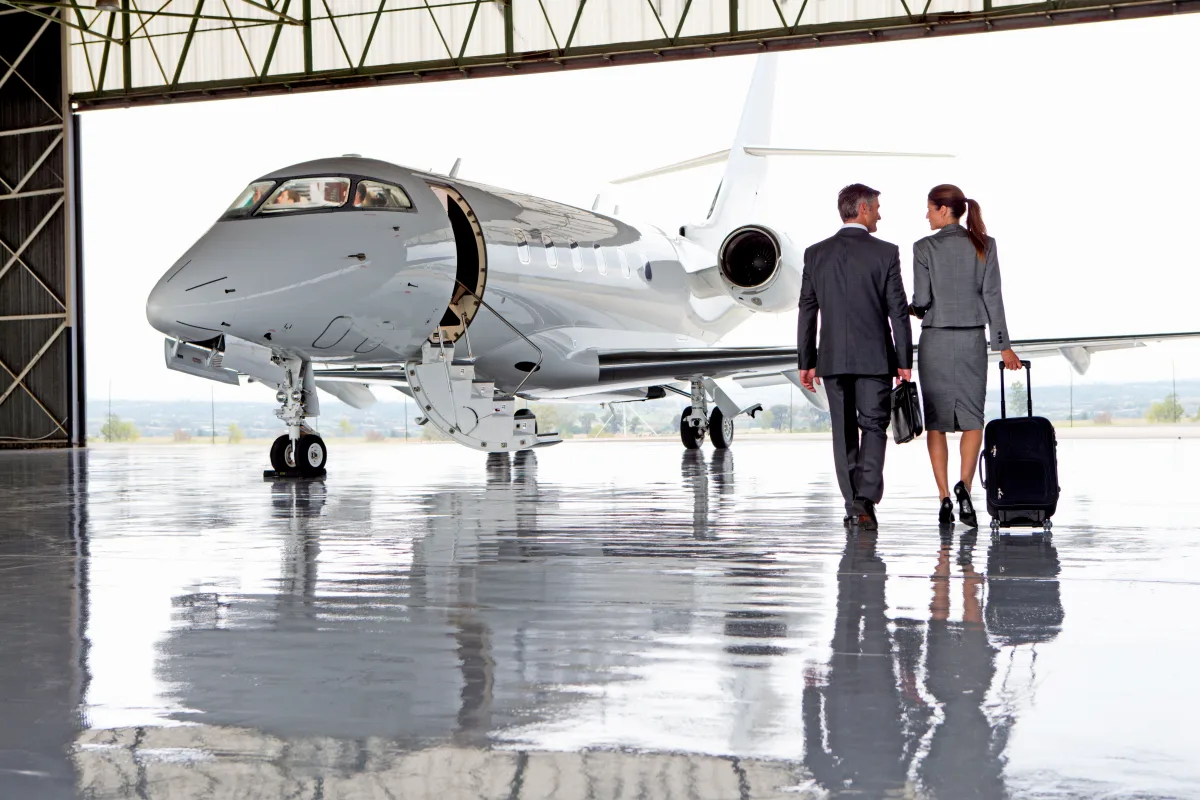
Thirty million euros for an aircraft — that sounds like a final figure. In business aviation, it's merely the beginning of a calculation that many buyers underestimate. Buying a business jet means buying a small-scale enterprise: with personnel, infrastructure, ongoing costs, and a depreciation rate that puts any sports car to shame.
Purchase Price Categories
Business jets are categorized by size and range. Each category has a characteristic price range for new aircraft:
New Aircraft Prices by Category (List Prices, approx.)
- Very Light Jet (VLJ): USD 2 – 4M (e.g., Cirrus Vision SF50, Honda HA-420)
- Light Jet: USD 4 – 9M (e.g., Embraer Phenom 100, Cessna Citation M2)
- Midsize Jet: USD 9 – 18M (e.g., Cessna Citation Latitude, Hawker 900XP)
- Super Midsize: USD 18 – 35M (e.g., Gulfstream G280, Bombardier Challenger 350)
- Large Cabin: USD 35 – 55M (e.g., Dassault Falcon 8X, Bombardier Global 6500)
- Ultra Long Range: USD 55 – 80M+ (e.g., Gulfstream G700, Global 7500)
Depreciation — The Silent Risk
Business jets lose an average of 5–10% of their value in the first year, then 3–6% annually — heavily dependent on manufacturer, model, condition, and market conditions. A five-year-old midsize jet is typically worth 50–65% of its original price.
Fixed Costs: What You Pay Every Month
Regardless of whether the aircraft flies or sits in the hangar, substantial fixed costs accrue:
Monthly Fixed Costs — Midsize Jet (Estimates)
- Crew salaries (2 pilots, cabin crew): EUR 25,000 – 55,000/month
- Hangar rent: EUR 3,000 – 15,000/month (depending on airport)
- Insurance: EUR 8,000 – 18,000/month
- Software & dispatch (flight planning, NOTAMs): EUR 500 – 2,000/month
- Maintenance reserve: EUR 10,000 – 25,000/month
- Total fixed costs approx.: EUR 46,500 – 115,000/month
Variable Costs: Per Flight Hour
In addition, there are the direct operating costs for every hour flown:
Variable Costs per Flight Hour — Midsize Jet
- Jet-A fuel (approx. 400–500 kg/h): EUR 700 – 1,200/h
- Landing fees & charges: EUR 200 – 800/h (highly variable)
- Ground handling: EUR 150 – 600/h
- Crew overtime/travel expenses: EUR 100 – 300/h
- Total variable costs approx.: EUR 1,150 – 2,900/h
The Full Picture: What Does a Flight Hour Really Cost?
When fixed costs are spread across annual utilization of 300–500 flight hours and variable costs are added, a midsize jet's total operating cost comes to EUR 2,000 – 5,000 per flight hour. For an ultra-long-range jet, it's EUR 5,000 – 10,000/h.
Alternatives to Full Ownership
Those who want to avoid the full financial burden of sole ownership have alternatives:
A business jet is not a purchase — it's an operating decision. Those who need fewer than 150–200 flight hours per year should prefer charter or fractional ownership over sole ownership. Only above 300+ hours does full ownership become economically viable, and only then if the aircraft is actively managed.
Airvalon recommendation: Before any purchase decision, consult an independent aviation consultant (not a manufacturer, not a broker) and have a complete 5-year TCO analysis prepared.
