
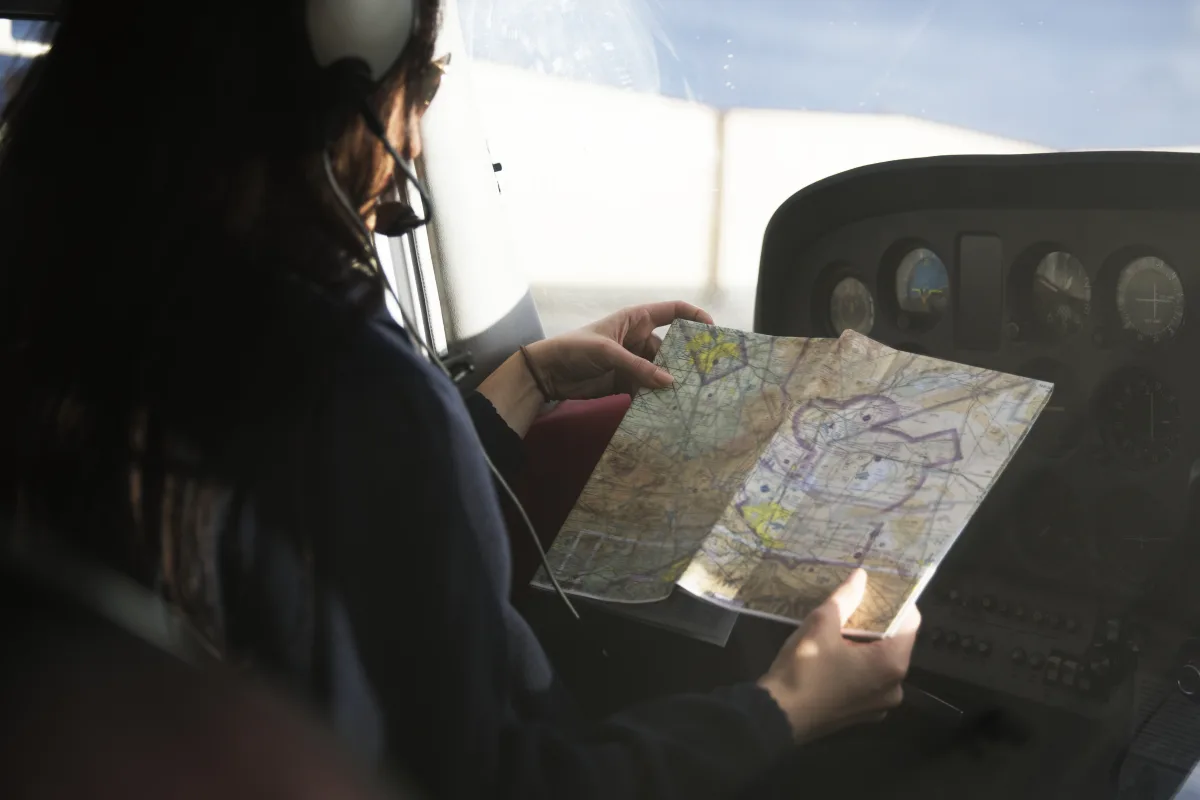
Every pilot career begins with this decision: I want to learn to fly. The Private Pilot Licence (PPL/A) is the first milestone — the license that permits you to operate a single-engine piston aircraft privately. What's involved, what it costs, and how to reach the goal most efficiently — that's what we cover here.
PPL/A — EASA Minimum Requirements at a Glance
- Minimum age: 17 years (solo flight permitted from age 16)
- Medical certificate: Class 2 (or LAPL Medical)
- Minimum flight hours total: 45 hours (of which 25 h dual, 10 h solo)
- Solo cross-country flight: Minimum 270 km (150 nm) with two intermediate stops
- Theory exams: 9 subjects (Air Law, Meteorology, Navigation, Aerodynamics, etc.)
- Practical exam (Skill Test): With an authority-designated examiner
The Training Process Step by Step
Phase 1 — Theory: Before the first solo flight can take place, the theoretical foundation must be established. The 9 EASA theory exams (also called "Ground School") can be completed in person at a flight school or through approved online courses. Realistic study time: 80–150 hours, spread over 3–9 months.
Phase 2 — Basic training with instructor: The first 10–15 dual instruction hours teach fundamental flight techniques — straight and level flight, turns, climbs, descents, landings. The first solo flight is the most emotional moment of training: typically after 15–20 hours, the student takes off alone.
Phase 3 — Solo practice flights and cross-country: After the first solo, further solo flights follow, solo cross-country navigation, and preparation for the skill test. The required 270 km solo cross-country is for many the most challenging moment — alone, navigating, with radio communication in unfamiliar airspace.
Phase 4 — Skill Test: The practical final exam with a designated examiner takes approximately 2 hours and covers all flight phases — takeoffs, landings, navigation exercise, emergency procedures, and simulated engine failure.
What Does a PPL Really Cost?
PPL/A Cost Calculation — Germany (2024)
- Flight hours (school) — approx. 45 h × EUR 180–250/h: EUR 8,100 – 11,250
- Theory course (in-person or online): EUR 500 – 2,000
- Class 2 Medical Certificate: EUR 150 – 300
- Exam fees (authority + examiner): EUR 300 – 600
- Headset, kneeboard, charts, materials: EUR 300 – 800
- Realistic total: EUR 9,500 – 15,000
Those who need more than the minimum 45 hours (average is 55–65 h) should budget an additional EUR 2,000–4,000.
Time Investment — How Long Does It Really Take?
The official minimum framework is 45 flight hours — but training duration varies widely:
What Comes After the PPL?
The PPL/A authorizes flying single-engine piston aircraft under VFR (Visual Flight Rules). Those who want more must continue training:
A PPL realistically costs EUR 10,000–15,000 in Germany and about one year for weekend-based training. That's a significant investment — but one that is absolutely worthwhile for people with a genuine passion for aviation.
Anyone who someday wants to fly their own Cirrus, TBM, or even a light jet starts today. The training along the way is not a detour — it's the foundation of every safe pilot career.
