
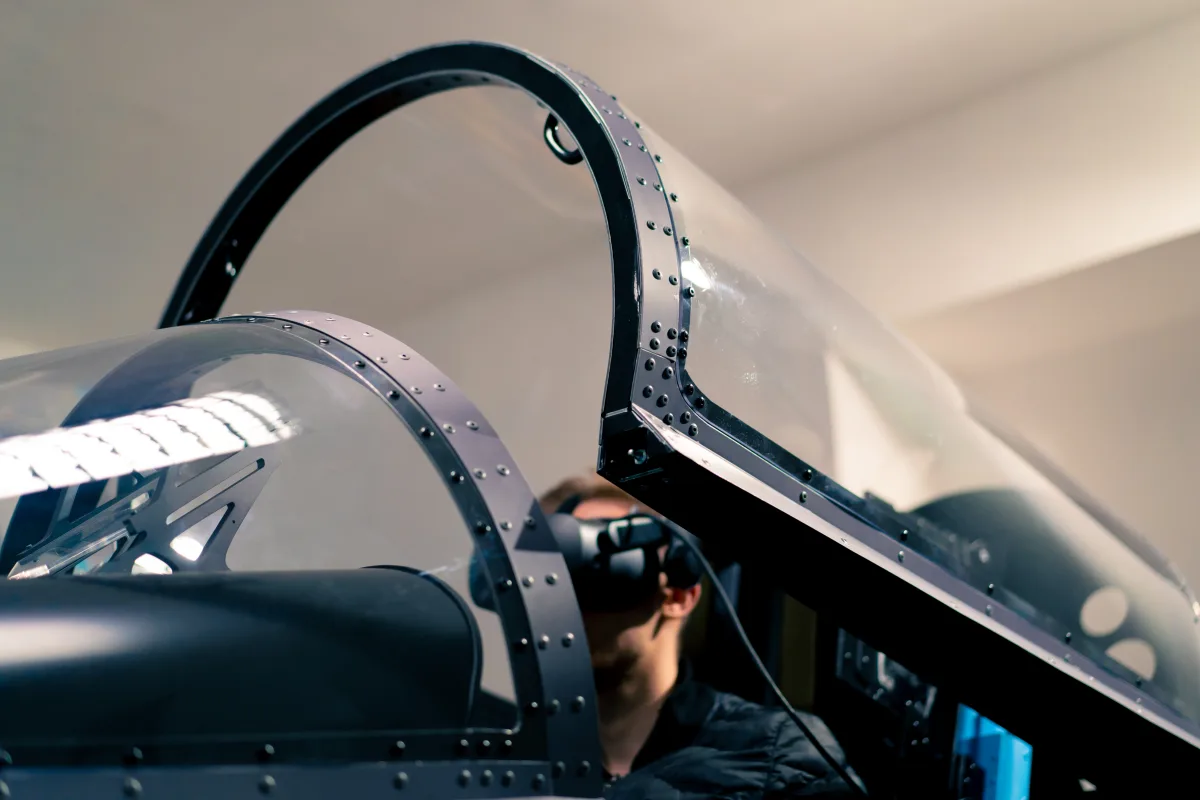
An engine failure after takeoff. A sudden hydraulic malfunction. A fire warning in the cockpit. In the real situation, there's no time to think — only to act. Pilots who react correctly in these moments do so from muscle memory. This muscle memory is only built through repeated training under realistic conditions.
Why the Manual Isn't Enough
Every certified aircraft has an Aircraft Flight Manual (AFM) with detailed emergency checklists. Most pilots have read these procedures — some can recite them from memory. But reading and knowing is not the same as acting under stress.
Cognitive researchers call it "stress narrowing": under acute stress, attention narrows, working memory shrinks, and complex decision-making processes collapse into simple, automated responses. Those who have trained emergency procedures a hundred times in the simulator have automated responses. Those who have only read them do not.
What Good Emergency Training Includes
Core Content of Professional Recurrent Training (Typical Annual Program)
- Engine Failure After Takeoff (EFATO): The most dangerous moment — just after lift-off, too little altitude for runway return, decision in 2–3 seconds
- Engine Fire Procedures: Shutdown sequence, fire extinguisher system, emergency landing
- Hydraulic Failure: Manual reversion, alternate gear extension, brake failure procedures
- Electrical Emergency: Load shedding, battery-only operations, avionics priorities
- Pressurization Failure / Hypoxia: Emergency descent, oxygen systems, crew incapacitation
- Rejected Takeoff (RTO): Decision speed V1, maximum braking
- ILS Approaches in IMC / Circling Approach: Approaches in poor visibility, go-around decisions
- Unusual Attitude Recovery: Recovery from spiral and stall — without TCAS, without SVT
Simulator vs. Aircraft — Why Sim Is the Better Choice
For emergency training, the simulator has clear advantages over the real aircraft:
Where to Train in Europe
High-quality simulator centers with Full-Flight Simulators (Level D — highest qualification level) are available in most major European countries:
Simulator training for emergency procedures is not a compliance exercise — it's the most important contribution a pilot can make to their own safety and the safety of their passengers. No technical system, no avionics, no CAPS parachute replaces a pilot who acts correctly under pressure.
Our recommendation: at least once annually, recurrent training in a type-rating-compliant simulator. For business jet pilots: twice annually, as required by EASA for commercial operations — even if you fly privately.
