
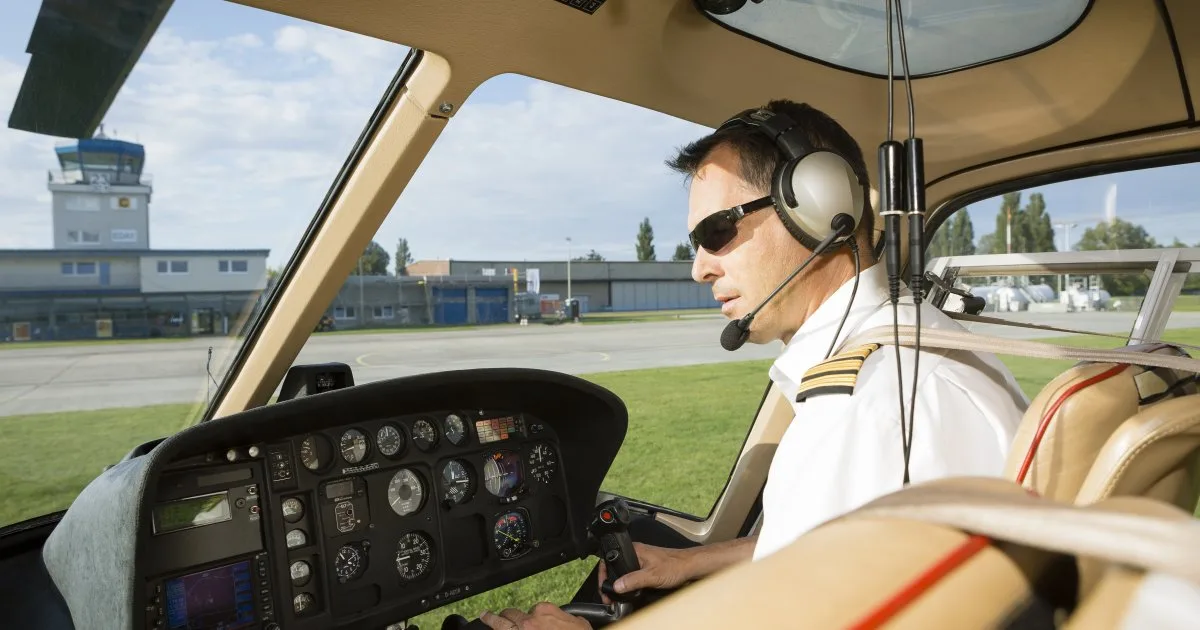
Turbine helicopters compared: Robinson R66, Bell 407, Airbus H125, H135, and H145 — performance, costs, missions, and type rating expenses.
Turbine Helicopters -- From Robinson R66 to Airbus H145
The step from a piston helicopter to a turbine helicopter is one of the most significant transitions in rotorcraft flying -- comparable to moving from a propeller airplane to a jet. Turbine engines deliver more power at lower weight, higher reliability, superior altitude performance, and a significantly better power-to-weight ratio. In return, acquisition and operating costs rise considerably. This article compares the most important civil turbine helicopters -- from the entry-level Robinson R66 to the heavy multi-role Airbus H145 -- and provides buyers, pilots, and aviation enthusiasts with a comprehensive overview of the turbine helicopter market.
Why Turbine? -- The Advantages at a Glance
Turbine engines have established themselves in helicopter aviation for good reason. Beyond a certain power class, they offer decisive advantages over piston engines:
- Power-to-Weight Ratio: A turbine engine typically weighs 50 to 70 percent less than a piston engine of comparable power output. The Rolls-Royce RR300 in the R66 produces 270 SHP at a dry weight of just 178 lbs (81 kg) -- a comparable piston engine would weigh over 330 lbs.
- Reliability: Turbines have fewer moving parts than piston engines and run vibration-free. The TBO (Time Between Overhaul) is typically 3,000 to 5,000 hours, compared with 1,800 to 2,200 hours for piston engines.
- Altitude Performance: Turbines lose less power at altitude than piston engines, since power output depends primarily on air mass flow rather than oxygen content. A turbine helicopter can operate at altitudes where a piston helicopter has long since reached its limits.
- Fuel: Turbines burn Jet-A1 (kerosene), which is available worldwide at every airport and is less expensive than AVGAS 100LL.
- Cold-Start Capability: Turbines start reliably even in extreme sub-zero temperatures -- a decisive advantage for alpine and northern operations.
Robinson R66 Turbine -- Gateway to the Turbine World
With the R66, Robinson Helicopter Company democratized the turbine helicopter in 2010. Based on the proven R44 platform but equipped with a Rolls-Royce turbine engine, the R66 delivers turbine performance at a fraction of the cost of established turbine rotorcraft.
| Parameter | Robinson R66 |
|---|---|
| Engine | Rolls-Royce RR300 (270 SHP, derated to 224 SHP MCP) |
| Seats | 4-5 (pilot + 3-4 passengers) |
| MTOW | 2,700 lbs (1,225 kg) |
| Useful Load | Approx. 1,015 lbs (460 kg) |
| Vne (max. speed) | 120 kt |
| Cruise Speed | 110 kt |
| Range | Approx. 300 NM (560 km) |
| Hover Ceiling IGE | 10,000 ft |
| Fuel Consumption | Approx. 24 gal/h Jet-A1 |
| New Price (ex-factory) | From approx. $900,000 |
| Operating Cost per Hour | Approx. $400-$520 (variable) |
The R66 retains the classic Robinson design: 2-blade rotor with teetering hub, open tail rotor, T-tail. The cabin is slightly larger than the R44's, with a baggage compartment behind the rear seats and improved climate control. The Rolls-Royce RR300 is a free-turbine engine specifically developed for the R66 and one of the smallest turbine engines on the market.
Strengths: Unbeatable value proposition, lowest operating costs of any turbine helicopter, proven Robinson maintenance infrastructure. Weaknesses: Single-engine (not approved for IFR or commercial passenger transport under CAT/Part 135 for certain operations), 2-blade rotor with noticeable vibration, limited avionics options.
Bell 407 -- The Versatile Workhorse
Since its introduction in 1996, the Bell 407 has been one of the best-selling light single-engine turbine helicopters worldwide. Over 1,600 units have been delivered, and the type is found in virtually every civil and para-public mission role.
| Parameter | Bell 407GXi |
|---|---|
| Engine | Honeywell HTS900 (1,021 SHP, MCP 813 SHP) |
| Seats | 7 (pilot + 6 passengers) |
| MTOW | 6,000 lbs (2,722 kg) |
| Useful Load | Approx. 2,425 lbs (1,100 kg) |
| Vne | 140 kt |
| Cruise Speed | 133 kt |
| Range | Approx. 340 NM (630 km) |
| Hover Ceiling IGE | 12,300 ft |
| New Price | From approx. $3.5 million |
| Operating Cost per Hour | Approx. $800-$1,050 |
The Bell 407 is distinguished by its 4-blade main rotor with a soft-in-plane hub, which produces significantly less vibration than the 2-blade rotors on Robinson models. The current 407GXi variant features a Garmin G1000H NXi glass cockpit, the Honeywell HTS900 engine, and improved flight performance.
Mission Areas: The 407 serves as a utility helicopter in the HEMS role (particularly in the U.S. under Part 135), as a law enforcement platform, for sightseeing tours, external load work, and VIP transport. The large installed fleet means globally available spare parts and experienced maintenance facilities.
Airbus H125 (AS350 Ecureuil) -- The High-Altitude Specialist
The H125 (formerly AS350 Ecureuil / AStar) is one of the most successful helicopters ever built, with over 5,500 units delivered. Its reputation as a high-altitude specialist is legendary: on May 14, 2005, pilot Didier Delsalle landed an H125 (then AS350 B3) on the summit of Mount Everest (29,029 ft / 8,848 m) -- the highest helicopter landing in history.
| Parameter | Airbus H125 |
|---|---|
| Engine | Safran Arriel 2D (952 SHP) |
| Seats | 6 (pilot + 5 passengers) |
| MTOW | 5,352 lbs (2,427 kg) |
| Max. External Load | 3,086 lbs (1,400 kg) |
| Vne | 155 kt |
| Cruise Speed | 130 kt |
| Range | Approx. 356 NM (660 km) |
| Service Ceiling | 23,000 ft (7,010 m) |
| New Price | From approx. $3.0 million |
| Operating Cost per Hour | Approx. $700-$950 |
The H125 features a Starflex rotor head with 3 blades -- an elastomeric-bearing, low-maintenance system without conventional hinges. This design significantly reduces maintenance workload. The Safran Arriel 2D engine delivers outstanding altitude performance thanks to its FADEC (Full Authority Digital Engine Control), which automatically optimizes power output at any altitude.
Typical Mission Areas: Heli-skiing, mountain rescue, alpine tours, external load work in mountainous regions, EMS, law enforcement, wildfire suppression. The H125 is the most widely operated helicopter in the Himalayan regions of Nepal and the Swiss Alps.
Airbus H135 -- The HEMS Standard
The H135 (formerly EC135) has established itself since its introduction in 1996 as the gold standard for air ambulance operations in Europe. Over 1,500 units are in service worldwide -- the majority in HEMS and law enforcement roles.
| Parameter | Airbus H135 P3H |
|---|---|
| Engines | 2x Safran Arrius 2B2plus (504 SHP each) or 2x P&WC PW206B3 |
| Seats | 7-8 (configuration dependent) |
| MTOW | 6,570 lbs (2,980 kg) |
| Cabin (L x W x H) | 11.9 x 5.1 x 4.2 ft (3.62 x 1.56 x 1.28 m), flat floor |
| Vne | 140 kt |
| Cruise Speed | 130 kt |
| Range | Approx. 335 NM (620 km) |
| New Price | From approx. $6.0 million |
| Operating Cost per Hour | Approx. $1,400-$1,900 |
The key features of the H135 are its Fenestron (shrouded tail rotor) -- quieter and safer than open tail rotors -- and its bearingless main rotor technology with 4 blades, which minimizes maintenance requirements. The cabin has a flat floor that facilitates stretcher loading and unloading, and large sliding doors on both sides.
The decisive advantage for the HEMS mission is twin-engine safety: following a single engine failure, the H135 can safely continue flight and land on the remaining engine. The OEI performance data (One Engine Inoperative) even permit hovering under certain weight and altitude conditions.
Airbus H145 -- The Heavy Multi-Role Helicopter
The H145 (formerly EC145) is the H135's larger sibling and bridges the gap between light and medium helicopters. With the H145D3 variant (5-blade rotor), Airbus introduced a significant modernization in 2020.
| Parameter | Airbus H145D3 |
|---|---|
| Engines | 2x Safran Arriel 2E (894 SHP each) |
| Rotor System | 5-blade bearingless (new from D3) |
| Seats | 9-10 (configuration dependent) |
| MTOW | 8,377 lbs (3,800 kg) |
| Useful Load | Approx. 3,748 lbs (1,700 kg) |
| Vne | 145 kt |
| Cruise Speed | 130 kt |
| Range | Approx. 367 NM (680 km) |
| Service Ceiling | 20,000 ft |
| New Price | From approx. $9.0 million |
| Operating Cost per Hour | Approx. $2,100-$2,900 |
The H145D3's 5-blade rotor replaced the previous 4-blade design, offering a 330 lbs (150 kg) payload increase while simultaneously reducing vibrations and external noise levels. The Helionix cockpit with 4 large displays and the Garmin GTN 750H navigation unit is among the most advanced cockpits in this class.
Mission Roles: The H145 is a true multi-role platform. It serves as a heavy HEMS helicopter (particularly with hoist for mountain rescue), as a law enforcement platform (with FLIR, searchlight, and PA system), as a VIP transporter (luxurious 5-6 seat cabin), and as a light military helicopter (UH-72A Lakota for the U.S. Army, H145M for the German military).
Leonardo AW139 -- The Offshore Standard
Since its introduction in 2003, the AW139 has become the world's best-selling medium twin-engine helicopter, with over 1,200 units delivered. It is the standard helicopter in offshore operations and increasingly present in the VIP and HEMS segments.
| Parameter | Leonardo AW139 |
|---|---|
| Engines | 2x P&WC PT6C-67C (1,679 SHP each) |
| Rotor System | 5-blade main rotor, 4-blade tail rotor |
| Seats | 12-15 (passenger version) |
| MTOW | 14,991 lbs (6,800 kg) / 15,432 lbs (7,000 kg) with option |
| Useful Load | Approx. 5,512 lbs (2,500 kg) |
| Vne | 167 kt |
| Cruise Speed | 155 kt |
| Range | Approx. 502 NM (930 km) |
| New Price | From approx. $14 million |
| Operating Cost per Hour | Approx. $3,500-$4,700 |
The AW139 impresses with its speed (one of the fastest helicopters in its class), its large and flexibly configurable cabin, and its range. In VIP configuration, it offers a comfortable cabin for 6 to 8 passengers with leather seating, work tables, and an entertainment system.
Comparison Table -- All Types at a Glance
| Criterion | R66 | Bell 407 | H125 | H135 | H145 | AW139 |
|---|---|---|---|---|---|---|
| Engines | 1 | 1 | 1 | 2 | 2 | 2 |
| MTOW (lbs) | 2,700 | 6,000 | 5,352 | 6,570 | 8,377 | 14,991 |
| Pax | 3-4 | 6 | 5 | 6-7 | 8-9 | 12-15 |
| Cruise (kt) | 110 | 133 | 130 | 130 | 130 | 155 |
| Range (NM) | 300 | 340 | 356 | 335 | 367 | 502 |
| New Price (million USD) | 0.9 | 3.5 | 3.0 | 6.0 | 9.0 | 14.0 |
| Cost/h (USD) | 400-520 | 800-1,050 | 700-950 | 1,400-1,900 | 2,100-2,900 | 3,500-4,700 |
Type Rating -- The Key to the Cockpit
Every turbine helicopter requires a specific type rating -- a type endorsement earned through theoretical and practical examination. Under FAA regulations, piston-powered single-engine helicopters require only a checkout, but turbine types require specific training. Under EASA, all type ratings are formally regulated. Costs and effort vary considerably:
| Type | Ground School (days) | Flight Hours | Simulator | Cost (approx.) |
|---|---|---|---|---|
| Robinson R66 | 2-3 | 5-8h | No | $5,800-$9,300 |
| Bell 407 | 5 | 8-12h | Optional (FTD) | $17,000-$23,000 |
| H125 | 5 | 8-12h | Optional | $17,000-$25,000 |
| H135 | 7-10 | 10-15h (+ Sim) | Yes (FFS Level D) | $23,000-$33,000 |
| H145 | 7-10 | 10-15h (+ Sim) | Yes (FFS Level D) | $25,000-$35,000 |
| AW139 | 10-14 | 15-20h (+ Sim) | Yes (FFS Level D) | $29,000-$41,000 |
For twin-engine types (H135, H145, AW139), type rating training is considerably more involved, as candidates must additionally complete OEI procedures (One Engine Inoperative), systems knowledge for redundant systems, and CRM (Crew Resource Management) training for two-pilot operations. Most twin-engine type ratings today include simulator sessions in Full Flight Simulators (FFS Level D), which are more realistic and safer than training in the actual helicopter.
Buying Decision -- Which Turbine Helicopter Fits?
The choice of the right turbine helicopter depends on the intended mission profile:
- Private owner, occasional flying: Robinson R66 -- lowest acquisition and operating costs, straightforward maintenance, proven design.
- Charter and tour operations: H125 or Bell 407 -- versatile, robust, good payload capacity, moderate operating costs.
- VIP transport and corporate flight: H135 or H145 -- twin-engine safety, comfortable cabin, quiet operation.
- HEMS and rescue: H135 (standard) or H145 (with hoist) -- medically optimized cabin, twin-engine, NVG compatible.
- Offshore and heavy transport: AW139 -- large cabin, long range, outstanding performance.
"The transition from piston to turbine is not merely a change of engine -- it is a leap into an entirely different performance class. The turbine is what transforms the helicopter into the tool it needs to be in professional service: reliable, powerful, and capable at any altitude."
The turbine helicopter market offers a suitable type for virtually every mission requirement. From the entry-level R66, which makes turbine technology affordable for private pilots for the first time, to the heavy AW139, equally at home on a North Sea oil platform and on a corporate rooftop helipad -- the range of available types covers all operational needs. The key is selecting the right type for the intended mission and realistically calculating the total cost of ownership.
