
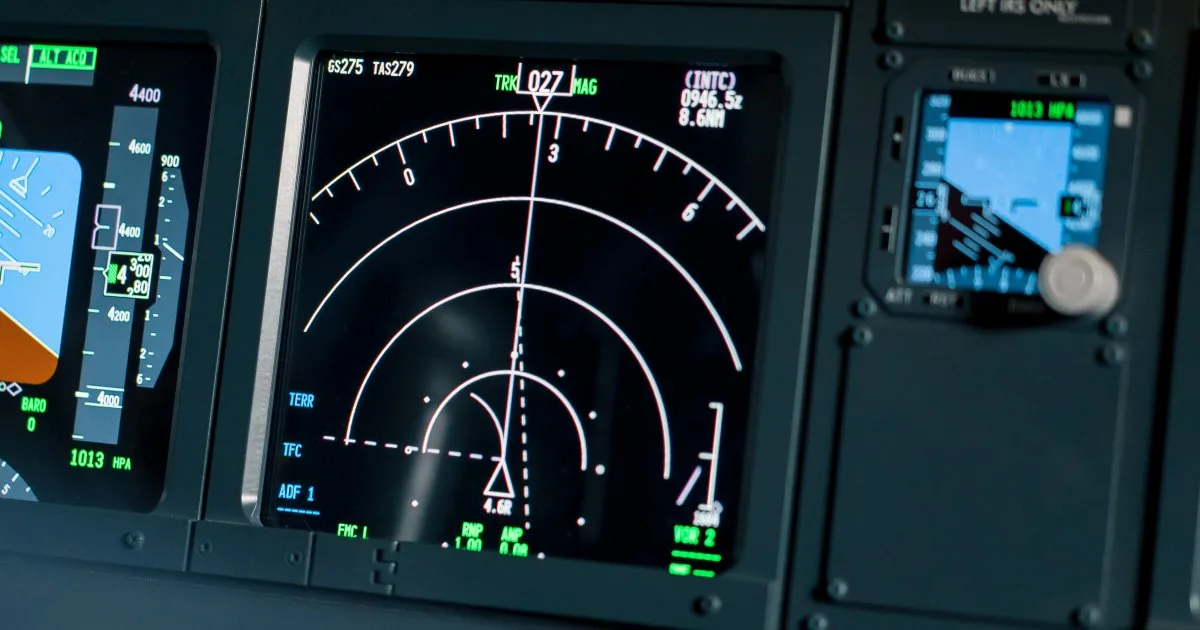
Instrument rating: Prerequisites, training content, costs, exams, and why the IR is the most valuable add-on qualification for private pilots.
Instrument Rating Training — What Comes After the PPL
The Private Pilot License (PPL) is the entry point into the world of flying. But pilots who want to use their aircraft as reliable transportation rather than a fair-weather pastime cannot avoid an additional qualification: the Instrument Rating (IR). This rating authorizes flight under Instrument Flight Rules (IFR) and opens an entirely new dimension of flying — more demanding, more systematic, and considerably safer in adverse weather conditions.
Prerequisites for the Instrument Rating
Before a pilot can begin IR training, several prerequisites must be met. Under EASA, these are regulated in Part-FCL (Flight Crew Licensing). Under the FAA (14 CFR Part 61), requirements differ but serve the same purpose:
- Valid PPL(A) or CPL(A): A valid Private Pilot License or Commercial Pilot License is the baseline prerequisite. Under FAA rules, a Private Pilot Certificate is sufficient.
- Flight experience: EASA requires at least 50 hours of cross-country flight time as pilot in command (PIC). The FAA requires 50 hours of PIC cross-country time as well, plus specific instrument training hour requirements.
- Medical certificate: At least Class 2 Medical with audiogram (EASA). Under FAA rules, a Third Class Medical is sufficient for exercising private pilot privileges with an instrument rating.
- ICAO English Language Proficiency: At least Level 4 (Operational). This is endorsed on the license and must be renewed every 4 years (Level 4) or 6 years (Level 5). The FAA does not have a separate language proficiency requirement for domestic operations.
- Night flight qualification: For the complete EASA IR(A), a night rating is required since IFR flights frequently occur at night. Under FAA rules, night flying is included in the Private Pilot Certificate.
Pathways to the Instrument Rating
There are different pathways to the instrument rating depending on whether you train under EASA or FAA regulations. EASA offers three distinct routes, while the FAA has a single pathway with more flexibility:
1. EASA IR(A) — The Full Instrument Rating
The complete Instrument Rating under Part-FCL is the most comprehensive qualification. It authorizes instrument approaches down to the lowest published minimums (CAT I for most GA pilots) and covers all phases of IFR flight: departure, en-route, and approach.
Ground school:
- 7 subjects at ATPL level (IR-relevant portions only)
- At least 150 hours of theory instruction at an ATO (Approved Training Organisation)
- Subjects: Air Law, Flight Planning & Monitoring, Human Performance, Meteorology, Navigation, Radio Navigation, IFR Communications
- Written examination administered by the national aviation authority
- Pass mark: 75% per subject
- Maximum examination period: 18 months for all subjects, maximum 6 sittings, maximum 4 attempts per subject
Flight training:
- Minimum 55 hours of instrument flight training
- Of which up to 35 hours may be in an FNPT II (Flight Navigation Procedures Trainer) or FFS (Full Flight Simulator)
- At least 20 hours must be completed in the aircraft
- At least 15 hours under the supervision of an IRI (Instrument Rating Instructor) or FI with IR teaching privileges
- Includes exercises in: Partial Panel, NDB/VOR tracking, holding patterns, ILS/RNAV approaches, missed approach procedures, unusual attitude recovery, ATC procedures
2. EASA CB-IR — Competency-Based Instrument Rating
The CB-IR was introduced by EASA in 2014 as a streamlined version of the full IR. It is designed for experienced pilots who want to have their existing competency recognized and complete the training more efficiently.
Advantages of the CB-IR:
- Reduced flight training: minimum 40 hours (instead of 55)
- Of which up to 20 hours in an FNPT II
- At least 10 hours in the aircraft under supervision
- Existing PIC instrument flight time can be credited up to 10 hours
- Same ground school and examination as the full IR
- Identical privileges to the full IR(A)
The CB-IR is the preferred route for many GA pilots, as it saves time and money without compromising the quality of the rating. The ground school remains equally demanding, but the flight training is individually tailored to the pilot's existing skill level.
3. EASA EIR — En-Route Instrument Rating
The EIR (En-Route Instrument Rating) is a restricted instrument qualification that applies only to the en-route phase. The pilot departs and lands under VFR but may conduct the en-route portion under IFR — including climbs and descents through cloud layers.
Key features of the EIR:
- No instrument approaches permitted — departure and landing must occur in VMC
- Reduced flight training: minimum 15 hours
- Simplified theoretical examination (IR theory at reduced level)
- Ideal for pilots who primarily want to climb and descend through clouds on longer routes
- Can later be upgraded to the full IR(A), with EIR hours credited
The EIR is an interesting compromise for pilots who want to expand their VFR capabilities without taking on the full commitment of an IR. In practice, however, the EIR has seen limited adoption, as the restriction "no instrument approaches" significantly reduces its practical value when weather at the destination airport is below VFR minimums.
4. FAA Instrument Rating
The FAA Instrument Rating follows a single pathway under 14 CFR Part 61 (or Part 141 for structured programs). Key requirements include:
- At least 50 hours PIC cross-country flight time
- 40 hours of actual or simulated instrument time
- 15 hours of instrument flight training from a CFII (Certified Flight Instructor — Instrument)
- An instrument cross-country flight of at least 250 NM with approaches at three different airports
- Pass the FAA Instrument Rating Knowledge Test
- Pass the practical test (checkride) with a Designated Pilot Examiner (DPE)
The FAA route is generally less expensive ($8,000-$15,000 USD) and offers more scheduling flexibility, but an FAA instrument rating must be converted or validated for use in EASA airspace.
The Theory Subjects in Detail
The theoretical IR training is demanding and should not be underestimated. The seven EASA examination subjects require a solid understanding of physical, navigational, and regulatory principles:
| Subject | Content | Key Topics |
|---|---|---|
| Air Law (010) | IFR regulations | ICAO Annex 2, SERA, IFR rules, flight plan filing, minimum fuel |
| Flight Planning (033) | IFR flight planning | IFR fuel planning, alternate calculation, ATC flight plan, ICAO forms |
| Human Performance (040) | Human factors | Spatial disorientation, stress, fatigue, decision making, CRM |
| Meteorology (050) | Aviation weather | TAF/METAR, SIGMET, AIRMET, fronts, icing, turbulence |
| General Navigation (061) | General navigation | Map projection, dead reckoning, earth magnetism |
| Radio Navigation (062) | Radio navigation | VOR, DME, NDB/ADF, ILS, GNSS/GPS, RNAV, SBAS (WAAS/EGNOS), radar |
| IFR Communications (092) | IFR radiotelephony | Clearances, readback, position reports, emergency procedures |
The pass mark is 75% per subject. Compared to PPL theory, the level is significantly higher — particularly in Radio Navigation and Meteorology, which require deep understanding of technical systems and atmospheric processes. Many candidates report that IR theory is more challenging than ATPL theory, as the knowledge is more concentrated and practically oriented.
Practical Training — From Simulator to Cockpit
The practical IR training is divided into two phases: simulator training and aircraft training. Both complement each other and are indispensable for thorough preparation.
Phase 1: FNPT II / Simulator
The FNPT II (Flight Navigation Procedures Trainer, Level II) is a certified simulator that replicates the instrument environment of an aircraft. Typical FNPT II models simulate single-engine piston aircraft such as the Cessna 172 or Piper PA-28. In the FAA system, comparable devices are categorized as ATDs (Aviation Training Devices) or FTDs (Flight Training Devices). The advantages of simulator training are substantial:
- Significantly cheaper than actual flight hours (approx. $130-$200/h vs. $275-$450/h in the aircraft)
- Weather-independent — training happens regardless of conditions outside
- Pausable and repeatable — procedures can be practiced as many times as needed
- Emergency scenarios can be safely trained (engine failure on approach, radio failure, etc.)
- Instrument scan, holding patterns, and approaches can be systematically developed
Phase 2: Aircraft Training
Flight hours in the actual aircraft are the core of the training. Here the pilot learns to apply procedures practiced in the simulator under real conditions — with real radio communications, real turbulence, real time pressure, and real ATC clearances. The student pilot wears a view-limiting device (foggles or hood) that blocks the view outside, forcing the pilot to fly solely by instruments. The instructor sits alongside with the outside view.
Typical exercises in practical training:
- Basic Instrument Flying: Straight-and-level flight, turns, climbs and descents by instruments, speed changes
- Radio Navigation: VOR tracking, NDB tracking, radial interception, DME arcs
- Holding Patterns: Standard and non-standard holdings, entry procedures (Direct, Teardrop, Parallel), timing
- Precision Approaches: ILS approaches (Localizer + Glide Slope), LPV approaches
- Non-Precision Approaches: VOR approaches, NDB approaches, RNAV (LNAV)
- Missed Approach: Go-around procedures with immediate climb, turn, and hold
- ATC Procedures: Clearance copying, readback, position reports, amended clearances
- Abnormal Procedures: Partial panel (attitude indicator or heading indicator failure), radio failure, GPS failure
- Unusual Attitude Recovery: Recognition and correction of unusual attitudes purely by instruments
The Skill Test — The Practical Examination
After completing both theoretical and practical training, the skill test awaits. This practical examination is administered by an authorized examiner — a Flight Examiner (FE) under EASA, or a Designated Pilot Examiner (DPE) under FAA rules — and typically takes 1.5 to 2 hours of flight time.
The skill test covers the following sections:
- Section 1: Pre-flight Operations — Flight planning, weather briefing, NOTAM check, aircraft inspection, IFR clearance
- Section 2: Departure — IFR departure, SID or radar vectors, transition
- Section 3: En-Route — ATC procedures, tracking, holding, abnormal procedures
- Section 4: Precision Approach — at least one ILS or LPV approach
- Section 5: Non-Precision Approach — at least one NPA (VOR, NDB, or RNAV LNAV)
- Section 6: Missed Approach — go-around procedure
The examiner evaluates not only technical execution but also situational awareness, decision-making, and communication with ATC. A common reason for failure is not lack of precision on approaches, but insufficient overall understanding of the IFR system.
Costs — An Honest Breakdown
The cost of an instrument rating varies considerably depending on the training organization, region, and individual learning progress. A realistic breakdown:
| Item | EASA IR(A) Full | EASA CB-IR | FAA IR |
|---|---|---|---|
| Ground school | $2,200 - $3,850 | $2,200 - $3,850 | $500 - $2,000 |
| Simulator (25-35 h) | $3,300 - $6,050 | $2,650 - $3,960 | $1,500 - $4,000 |
| Aircraft (20-25 h) | $5,500 - $11,000 | $2,750 - $5,500 | $4,000 - $8,000 |
| Instructor | Included in flight hours | Included in flight hours | Included in flight hours |
| Written exam | $330 - $550 | $330 - $550 | $175 |
| Skill test / Checkride | $550 - $880 | $550 - $880 | $500 - $900 |
| Training materials, charts | $330 - $550 | $330 - $550 | $200 - $400 |
| Total cost | $12,000 - $22,000 | $8,800 - $15,400 | $8,000 - $15,000 |
Additional costs may arise from extra flight hours (if training progress is slower than planned), reexaminations, and travel expenses to the training organization. Experience shows that actual costs often exceed the original training school quote by 20-30%.
Currency — Proficiency Checks and Instrument Currency
Unlike the PPL, which can be maintained through flight experience, the instrument rating requires regular proficiency verification:
- EASA: An annual Proficiency Check (IPC) administered by an authorized examiner or in a certified simulator, covering at least one precision approach, one non-precision approach, abnormal procedures, a holding pattern, and en-route procedures.
- FAA: Instrument currency requires six approaches, holding procedures, and intercepting/tracking courses within the preceding 6 calendar months. If currency lapses, an Instrument Proficiency Check (IPC) with a CFII or examiner is required to reinstate privileges.
Cost of the annual proficiency check: approximately $550-$1,300 (depending on whether in simulator or aircraft). If the check is not completed within the required period, the IR privileges lapse — the pilot must then pass a full skill test again, which is more involved and expensive.
Training Tips
Based on the experience of many IR graduates, here are some proven recommendations:
- Study ground school first: Begin theoretical training before stepping into the simulator. Understanding why an ILS works makes learning the approach faster.
- Train intensively: Ideally complete flight training in a concentrated 4-8 week block rather than stretching it over months. Skills consolidate better with daily practice.
- Use simulators at home: Personal practice on PC simulators (e.g., X-Plane, MSFS with realistic IFR setup) is a valuable supplement — but does not replace the certified FNPT or ATD.
- Practice ATC communication: Listen to LiveATC.net and practice IFR phraseology. Communication with ATC is the most difficult part for many students.
- Practice flight planning: Prepare a complete IFR flight plan before every training session — SID, route, STAR, approach, alternate, fuel calculation.
- Keep flying IFR after the rating: The first 50 IFR hours after the skill test are the most important. Fly IFR regularly to build routine.
Conclusion: An Investment in Safety and Versatility
The Instrument Rating is undoubtedly one of the largest investments a private pilot can make after the PPL — both financially and in terms of time. But it is also one of the most rewarding. The ability to fly safely and legally from A to B in virtually any weather transforms the aircraft from a fair-weather toy into genuine transportation. More importantly, the training sharpens situational awareness, precision, and systems understanding in ways that make every VFR flight safer as well.
For pilots operating in regions where weather is often unsettled and airspace structure is complex, the IR is not just a nice-to-have — it is often the difference between a pilot who plans many flights but flies few, and one who actually completes their trips reliably. The EASA CB-IR has lowered the entry barrier, and the FAA pathway has always offered a relatively accessible route to instrument flying. Any pilot who is serious about aviation should seriously consider this path.
