
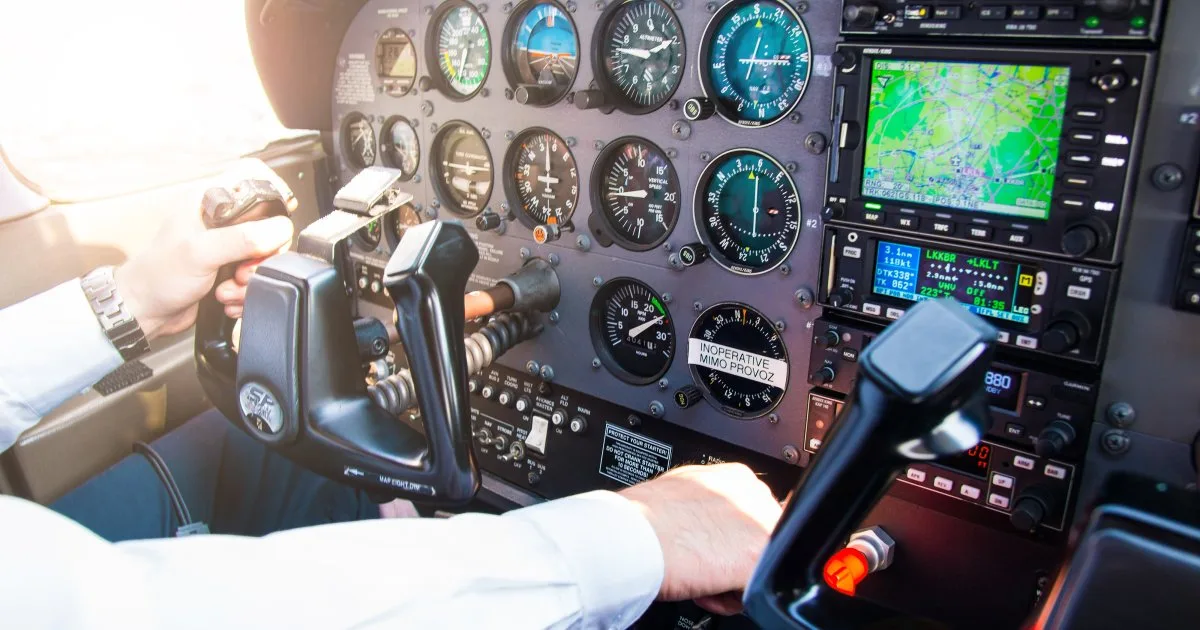
Stress management for pilots: Acute stress during emergencies, chronic stress in daily operations, coping strategies, and when you should stop flying.
Stress in the Cockpit -- How Professional Pilots Deal With It
Stress is to flying what fuel is to the engine -- it cannot be eliminated, but it can be managed. Pilots work in an environment characterized by high responsibility, time pressure, complex systems, and occasional emergency situations. The ability to think clearly under stress, act in a structured manner, and preserve one's own mental health distinguishes the competent pilot from the brilliant one. This article examines the various forms of cockpit stress, presents proven coping strategies, and explains why openly acknowledging psychological strain is not weakness but perhaps the strongest form of professionalism.
Acute Stress -- the Emergency in the Cockpit
Acute stress arises from sudden, unexpected events: an engine failure on takeoff, smoke in the cockpit, a sudden decompression, a near-miss with another aircraft. In such moments, the body is switched within milliseconds into fight-or-flight mode: adrenaline and cortisol flood the bloodstream, heart rate increases, pupils dilate, muscles tense, and perception narrows to the immediate threat.
The Yerkes-Dodson Curve
The Yerkes-Dodson curve describes the relationship between arousal level and performance. At low stress levels, performance is low -- the pilot is bored, inattentive, understimulated. With increasing stress, performance rises: concentration sharpens, reaction time shortens, attention focuses. This optimum -- the peak of the curve -- is the state in which pilots do their best work. It is the state of controlled vigilance.
When stress exceeds a critical point, however, performance collapses rapidly. In the range of overload, typical stress symptoms appear:
- Tunnel vision (perceptual narrowing): Attention fixates on a single problem while other -- potentially more important -- factors are overlooked. A classic example: the crew focuses on a faulty landing gear indicator and fails to notice that the aircraft is losing altitude (as in Eastern Air Lines Flight 401, 1972).
- Regression: Under extreme stress, people revert to simpler, more primitive behaviors. Trained procedures are forgotten, and instinct takes over -- which in an aircraft is rarely the right strategy.
- Freezing: In rare cases, extreme stress leads to complete incapacitation. The pilot stares at the instruments but does not know what to do.
- Hyperactivity: The opposite of freezing -- frantic, uncontrolled action without a clear plan. Switches are operated without thought, checklists are skipped, communication becomes chaotic.
The Startle Effect
The startle effect is the involuntary physiological reaction to a sudden, unexpected event -- a loud bang, a sudden warning alert, an unexpected aircraft maneuver. The startle effect can last up to 30 seconds and is characterized by an initial phase of incapacitation, followed by a phase of heightened arousal that can transition into the tunnel vision or hyperactivity described above.
In flight safety research, the startle effect has received considerable attention in recent years, particularly following the accident of Air France 447 (2009). The crew was surprised by a pitot probe failure and the disconnection of the autopilot and reacted in a way that caused the crash rather than preventing it. The initial startle reaction prevented a structured analysis of the situation.
Countermeasures against the startle effect include:
- Surprise-and-startle training: In modern simulator sessions, unexpected scenarios not announced in the briefing are deliberately introduced to train the response to surprises.
- Verbalization: Speaking the situation aloud ("What is happening right now?") helps activate the rational part of the brain and break through the fight-or-flight mode.
- Controlled breathing: Three deep, deliberate breaths can lower the pulse within seconds and restore cognitive clarity.
- Adhere to standard procedures: Once the initial seconds of the startle reaction are overcome, immediately revert to trained procedures. "Aviate, Navigate, Communicate" -- in that order, without exception.
Chronic Stress -- the Gradual Erosion
While acute stress represents a single event, chronic stress is a sustained condition that builds over weeks, months, or years. In commercial aviation, numerous factors cause chronic stress:
Shift Work and Irregular Duty Hours
Pilots in commercial aviation work within a system that fundamentally contradicts the human biorhythm. Early departures at 0400, late arrivals after midnight, alternating shift patterns, and short turnaround times between duties disrupt the circadian rhythm and lead to chronic sleep deficit. EASA Flight Time Limitations (FTL) and FAA Part 117 duty time rules set limits -- but these limits are maximums, not optimums. Actual recovery depends on many factors that regulations cannot capture.
Work-Life Balance
Absence from home is one of the greatest burdens for pilots with families. Birthdays missed, parent-teacher conferences that cannot be attended, and partnerships strained by distance -- these factors accumulate and can lead to a profound dissatisfaction that manifests as chronic stress. Studies show that the divorce rate among pilots exceeds the average, and that family burdens are a significant risk factor for depression in the cockpit.
Jet Lag as a Chronic Stressor
Long-haul pilots live in a state of permanent time zone displacement. The body barely has time to adapt to one time zone before the next flight into a different zone begins. Chronic jet lag is associated with elevated cortisol levels, sleep disorders, gastrointestinal problems, and a weakened immune system. Long-term, the risk of cardiovascular disease, metabolic syndrome, and cognitive impairment increases.
Layover Isolation
Layover isolation describes the social isolation that pilots experience during overnight stays in unfamiliar locations. Alone in a hotel room in a foreign city, without familiar social contacts, in a time zone that makes sleep difficult -- this situation can become problematic, particularly for pilots prone to introversion or depressive moods. The availability of alcohol and the absence of social accountability increase the risk of unhealthy coping strategies.
Threat and Error Management (TEM)
Threat and Error Management (TEM) is a concept developed by the University of Texas Human Factors Research Project and now recognized by ICAO as a standard framework for flight safety. TEM is based on the recognition that threats and errors are inevitable components of every flight, and that the key to safety lies not in avoiding all errors -- which is impossible -- but in the effective management of threats and the early detection and correction of errors before they lead to an Undesired Aircraft State (UAS).
The TEM model distinguishes three levels:
- Threats: External factors that jeopardize safety -- weather, system failures, airport complexity, traffic density, organizational errors. Threats exist independently of the crew.
- Errors: Actions or omissions by the crew that deviate from intention or procedures and reduce the safety margin. Errors can be provoked by threats or occur spontaneously.
- Undesired Aircraft States: Aircraft states not intended by the crew that reduce the safety margin -- for example, excessively low altitude, an unstabilized approach configuration, or an airspeed deviation.
For stress management, TEM means: the crew proactively identifies threats (including internal threats such as fatigue, stress, or communication problems), plans countermeasures, and monitors execution. Errors are not viewed as personal failure but as systemic reality, caught through crosschecks, callouts, and an open cockpit environment.
FORDEC -- Structured Decision-Making Under Stress
The FORDEC model is a structured decision-making framework widely used in European aviation (US aviation frequently uses the DECIDE model). It provides a clear sequence of steps for decisions under time pressure and stress:
| Step | Element | Description |
|---|---|---|
| F | Facts | What do we know? What information is available? What do the instruments show? What does ATC say? What are the objective data? |
| O | Options | What courses of action are available? Continue, turn back, divert to alternate, emergency landing? Allow creative solutions, not just the obvious ones. |
| R | Risks & Benefits | What are the risks and benefits of each option? Which option offers the best ratio of safety to feasibility? |
| D | Decision | Make a clear decision. Communicate it unambiguously to all involved. A mediocre decision implemented consistently is better than no decision. |
| E | Execution | Implement the decision. Distribute tasks, work through checklists, inform ATC, brief the cabin. |
| C | Check | Verify whether the decision is achieving the desired effect. Have circumstances changed? Does the decision need to be revised? FORDEC is a cycle, not a linear process. |
FORDEC works because it gives the brain a structure when stress restricts free thinking. Instead of drowning in a chaos of information and emotions, the pilot follows a clear path. FORDEC is not a theoretical construct -- it is actively trained in pilot education and applied in simulator sessions under realistic stress.
Stress-Inoculation Training
Stress-Inoculation Training (SIT) is a psychological training concept originally developed by Donald Meichenbaum, used in military aviation, special forces, and increasingly in civil aviation. The principle resembles a medical vaccination: through controlled exposure to stressful situations, stress tolerance is gradually increased.
SIT comprises three phases:
- Phase 1 -- Conceptualization: The pilot learns to understand the mechanisms of stress: What happens in the body? What cognitive distortions occur? How do I recognize the symptoms?
- Phase 2 -- Skills acquisition: Learning concrete coping strategies: breathing techniques, positive self-talk ("I am trained for this situation"), mental rehearsal sequences, prioritization.
- Phase 3 -- Application: Gradual exposure to increasingly demanding stress situations in the simulator or controlled training environments. Difficulty is slowly increased so that the pilot accumulates experiences of success and builds confidence in their abilities.
Studies show that SIT significantly improves performance under stress, shortens recovery time after stress events, and reduces the risk of post-traumatic stress disorder following critical incidents.
Peer Support Programs -- Help from Equals
Peer Support Programs (PSP) are confidential counseling and support services offered by specially trained colleagues -- other pilots. They provide a low-threshold point of contact for pilots struggling with psychological burdens, personal crises, or occupational stress.
Most major airlines now operate PSP programs: Lufthansa, Swiss, Austrian, KLM, British Airways, Delta, United, American, and many others. The peer supporters are not therapists but trained listeners who, from their own experience, understand the burdens of the pilot profession and can refer to professional help services when needed. Confidentiality is a core principle: what is said in a peer support conversation remains between the participants -- reporting to the employer or authority occurs only in case of immediate risk to flight safety.
EASA has made the establishment of support programs mandatory for airlines under Regulation (EU) 2018/1042. The FAA supports similar programs through Advisory Circulars. These programs include, alongside peer support, Employee Assistance Programs (EAP) with professional psychological counseling.
Mental Health Stigma -- the Germanwings Effect
The crash of Germanwings Flight 9525 on March 24, 2015, marks a turning point in the discussion about mental health in aviation. The first officer, who suffered from severe depression and had concealed his unfitness to fly from his employer, deliberately flew the aircraft into a mountain in the French Alps. All 150 people on board perished.
The consequences of this event were profound and ambivalent. On one hand, it led to important improvements:
- Introduction of the Two-Person-in-Cockpit Rule at many airlines
- Increased attention to mental health in pilot training
- Mandatory establishment of Peer Support Programs (EASA)
- Discussion about adapting medical confidentiality in fitness-to-fly matters
On the other hand, the Germanwings crash has paradoxically reinforced the stigma of mental illness among pilots. Many pilots now fear even more that acknowledging psychological problems will lead to immediate license revocation. The fear of losing the Medical -- and thereby the career, the identity, the livelihood -- prevents pilots from seeking help. The result is a system in which those who most urgently need support are least likely to access it.
The solution lies in a cultural shift encompassing the following elements:
- Non-punitive reporting systems: Pilots must have the assurance that acknowledging psychological burdens does not automatically lead to license revocation. In many cases, temporary stand-down with treatment and subsequent return is possible.
- Normalization: Psychological strain is not the sign of a "weak" personality but a normal response to the demands of a challenging profession. Studies show that 12 to 15 percent of all pilots experience a depressive episode during their career.
- Leadership culture: When experienced captains speak openly about their own experiences with stress and psychological strain, this substantially lowers the barrier for younger colleagues.
IMSAFE Check Before Every Flight
The IMSAFE checklist (Illness, Medication, Stress, Alcohol, Fatigue, Eating/Emotion), described in detail in the pilot fitness article, is also the central self-assessment tool in the context of stress. The letter "S" explicitly stands for Stress, and the letter "E" includes emotional burdens. An honest IMSAFE check before every flight -- not just as routine but as a deliberate self-assessment -- is the first line of defense against stress-induced errors in the cockpit.
The decisive question is not "Do I feel good enough to fly?" but rather: "Would I let my family board this flight if they knew how I feel right now?" This formulation compels honesty because it foregrounds the responsibility toward others.
Critical Incident Stress Management (CISM)
Critical Incident Stress Management (CISM) is a structured program for the psychological care of individuals who have experienced a critical incident -- whether a near-accident, an emergency landing, the death of a passenger, a security alert, or a severe technical failure. CISM was originally developed for emergency responders and military personnel and is now routinely employed by many airlines.
The core elements of CISM include:
- Defusing: A brief, informal conversation within a few hours of the event. The goal is to reduce the immediate emotional burden and signal to those affected that their reactions are normal.
- Critical Incident Stress Debriefing (CISD): A structured group conversation, typically 24 to 72 hours after the incident, led by trained facilitators. Participants describe their perceptions, thoughts, and feelings during the event. The goal is to process the experience and prevent post-traumatic stress symptoms.
- Follow-up: Individual aftercare for persons who continue to experience symptoms. Referral to professional psychotherapists with aviation experience as needed.
- Pre-incident education: Training all crew members about normal stress reactions and available support services before a critical incident occurs. Those who know what to expect are better prepared.
CISM is not therapy but crisis intervention. It does not replace professional psychological treatment for PTSD or other stress-related disorders, but it can significantly reduce the occurrence of such disorders.
"I'm Not Fit to Fly" -- the Strongest Sentence a Pilot Can Say
In an industry defined by performance, reliability, and professionalism, the sentence "I am not fit to fly today" initially sounds like an admission of failure. In truth, it is the exact opposite.
Every flight not undertaken because the pilot honestly recognizes that their physical or psychological condition does not meet the demands is a potentially prevented accident. The history of aviation is full of accidents that could have been avoided if a pilot had had the courage to ground themselves: the exhausted captain attempting an approach in poor weather after 14 hours of duty; the pilot with untreated depression ignoring their concentration difficulties; the first officer who enters the cockpit with residual alcohol because they do not want to let down their colleague.
"I'm not fit to fly" is not a sign of weakness. It is a sign of strength, of professionalism, and of responsibility toward every single person on board. It is proof that the pilot has understood what safety truly means: not the absence of problems, but the courage to name problems before they become catastrophes.
Airlines that foster a culture in which grounding oneself is accepted and respected -- without blame, without career consequences, without social stigmatization -- are demonstrably safer than those where pressure exists to fly under all circumstances. The best safety culture is one in which the sentence "I am not fit today" is as natural as fastening the seatbelt.
Practical Stress Management Strategies for Everyday Life
Beyond the formal programs and models, there are a number of practical strategies that pilots can apply in daily life:
- Regular physical activity: Exercise is one of the most effective stress buffers. Endurance sports lower cortisol levels, improve sleep quality, and strengthen psychological resilience.
- Maintain social contacts: Isolation is a risk factor for depression. Even though the profession requires regular absence, pilots should consciously invest in their relationships -- family, friends, hobbies outside of aviation.
- Mindfulness and meditation: Studies show that regular mindfulness practice increases stress tolerance, improves emotional regulation, and enhances cognitive flexibility. Even 10 minutes of daily meditation can produce measurable effects.
- Set professional boundaries: Being able to say no -- to overtime, to additional flights, to expectations exceeding one's capacity -- is an essential competency that must be actively practiced.
- Seek help: Visiting a peer supporter, psychologist, or AME is not failure but proactive risk management. Early intervention prevents escalation.
Conclusion
Stress in the cockpit is not a question of whether but of how -- how it is recognized, how it is managed, how it is dealt with long-term. Modern aviation has developed an arsenal of tools with TEM, FORDEC, CISM, and Peer Support Programs that professionalize the handling of stress. But all these tools are only as effective as the individual's willingness to use them. A pilot who knows their own limits, who has the courage to ground themselves when necessary, and who works in an industry that rewards this courage rather than punishing it -- that pilot is the safest pilot. Not because they never experience stress, but because they have learned to fly with stress without being flown by it.
