
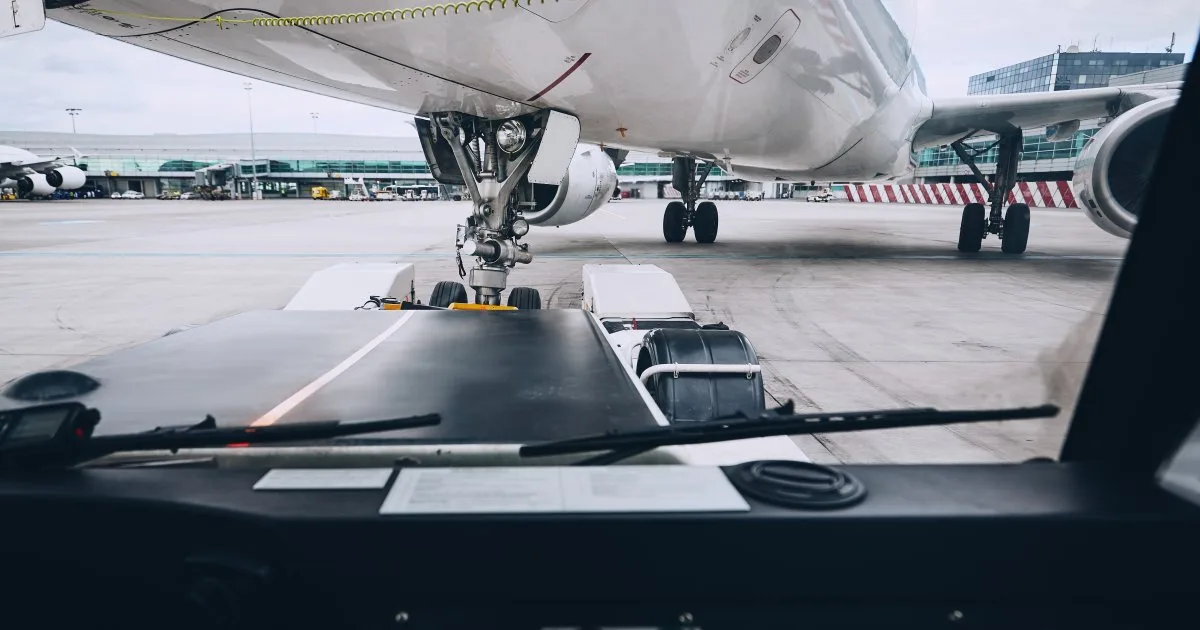
Sidestick vs. yoke: The fundamentally different design philosophies, flight envelope protection, and why pilots have preferences.
Airbus vs. Boeing — Philosophy, Controls, and Cockpit Differences
The rivalry between Airbus and Boeing is more than an economic competition — it is a fundamental difference in design philosophy that is reflected in every detail of the cockpit. While Airbus embraces full computer control and protective envelopes, Boeing has traditionally placed its trust in the pilot as the ultimate decision-maker. For pilots transitioning between the two manufacturers, these differences are far more than cosmetic — they fundamentally change the way you fly an aircraft.
The Airbus Philosophy: The Computer as Guardian
The core Airbus philosophy can be summed up in a single sentence: The computer has the final say. Starting with the A320 — the first civil fly-by-wire transport aircraft (first flight 1987) — Airbus implemented a system in which the pilot's control inputs are filtered through multiple computer systems before reaching the control surfaces. The pilot issues a command, and the computer decides whether and how that command is executed.
This system is built on the concept of Flight Envelope Protection: the computer prevents the aircraft from being flown outside its safe operating envelope. In practical terms, this means:
- Alpha Protection: The aircraft cannot be stalled. If the pilot pulls the sidestick fully aft, the angle of attack is limited to Alpha Max — the aircraft will not pitch up further.
- Bank Angle Protection: Bank angle is limited to 67 degrees. Even with full sidestick deflection, this limit cannot be exceeded. At bank angles above 33 degrees, the aircraft automatically levels itself when the pilot releases the sidestick.
- Load Factor Protection: Load factor is limited to +2.5g to -1g to prevent structural overload.
- High Speed Protection: The computer prevents exceeding VMO/MMO (Maximum Operating Speed/Mach Number) through automatic pitch-up.
- Pitch Attitude Protection: Pitch attitude is limited to 30 degrees nose up and 15 degrees nose down.
The Three Laws: Normal, Alternate, and Direct Law
The Airbus fly-by-wire system operates in different modes known as Laws. In the default state — Normal Law — all protective functions are active. The pilot does not directly control the flight surfaces but commands load factors: pulling the sidestick aft does not command an elevator deflection but a specific G-load. When the pilot releases the sidestick, the aircraft automatically returns to 1g and level flight.
When certain system failures occur, the system degrades to Alternate Law. Here, some protective functions are reduced or deactivated. Alpha Protection is replaced by Alpha Floor Protection (automatic thrust lever advance when approaching a stall), and Bank Angle Protection may be limited. The handling characteristics change noticeably but remain manageable.
In the worst case — with multiple computer failures — the system enters Direct Law. Here, there is a direct, unfiltered connection between the sidestick and the control surfaces, but without any protective functions. The aircraft then behaves similarly to a conventionally controlled aircraft. This mode is extremely rare in practice and is extensively practiced in simulator training.
The Sidestick: One-Handed Control Without Force Feedback
The most visible feature of an Airbus cockpit is the sidestick — a small control stick mounted beside the pilot's seat, replacing the traditional control column or yoke. The sidestick is spring-loaded and returns to the neutral position when released.
A key characteristic: the two sidesticks are not mechanically coupled. When the captain moves their sidestick, the First Officer's sidestick does not move — and vice versa. If both pilots input commands simultaneously, the inputs are algebraically summed, which can lead to unintended control commands. To prevent this, there is a Dual Input warning tone and the ability to deactivate the other pilot's sidestick via a priority button.
The lack of force feedback remains a point of debate among pilots. Proponents argue that the precise control and reduced physical workload are advantages. Critics miss the tactile feedback that a conventional yoke immediately provides about the aircraft's behavior and what the other pilot is doing.
The Boeing Philosophy: The Pilot as the Ultimate Authority
Boeing's traditional philosophy is the exact opposite: The pilot always has the final say. Even in Boeing's more modern fly-by-wire models (B777, B787), the manufacturer has consistently ensured that the pilot retains the ability to override computer control and fly the aircraft manually.
Boeing uses a conventional yoke that has been retained even in its most modern models. The yoke provides force feedback — the pilot feels control pressure that increases with the aerodynamic loading on the control surfaces. On the B777 and B787, this feedback is artificially generated (Artificial Feel) since the controls are electrically operated, but the tactile experience is preserved.
Crucially, the two yokes are mechanically or electronically coupled. When the captain moves the yoke, the First Officer's yoke moves with it. Both pilots can always see and feel what the other is doing — a direct communication channel that is absent in the Airbus.
Boeing's Safety Systems
Boeing aircraft also feature safety systems, but these warn the pilot rather than actively intervening:
- Stick Shaker: When approaching the critical angle of attack, the control column vibrates forcefully — an unmistakable tactile warning that urges the pilot to act, but does not intervene on its own.
- Stick Pusher: In some Boeing models, a mechanism pushes the control column forward when approaching a stall to lower the nose. The pilot can override this by pulling back harder.
- Speed Trim System: Automatically adjusts trim to compensate for speed changes, but can be overridden by the pilot at any time.
- Bank Angle Alert: A voice annunciation ("Bank Angle, Bank Angle") warns of excessive bank, but the system does not prevent the pilot from banking further.
Cockpit Layout: A320 vs. B737
The two most widely flown narrowbody types — the Airbus A320 and the Boeing 737 — differ considerably in their cockpit layout:
| Feature | Airbus A320 | Boeing 737 NG/MAX |
|---|---|---|
| Flight Controls | Sidestick (side-mounted) | Yoke (center-mounted) |
| Fly-by-Wire | Full FBW (since 1988) | Hybrid (cables + hydraulics, partial FBW on MAX) |
| Displays | 6 identical LCDs | 6 LCDs (NG) / larger displays (MAX) |
| Thrust Levers | Autothrust system (levers do not move) | Autothrottle (levers move with thrust changes) |
| Overhead Panel | Dark Cockpit concept (all dark = all normal) | Traditional layout with more switches |
| Trim | Automatic (in Normal Law) | Manual / Speed Trim System |
| ECAM/EICAS | ECAM with automated checklists | EICAS with manual checklists |
A particularly striking difference concerns the thrust levers: on Airbus, the thrust levers do not move when the autothrust system is active — the pilot sets them in the CLIMB or FLEX detent position and the system automatically manages thrust. On Boeing, the throttle levers physically move when the autothrottle system adjusts thrust. This gives the Boeing pilot additional visual and tactile feedback about the current thrust setting.
Cross-Crew Qualification: Airbus' Strategic Advantage
A strategic advantage for Airbus is Cross-Crew Qualification (CCQ) and the Mixed Fleet Flying (MFF) capability within the Airbus family. Through extensive cockpit standardization, pilots can transition between different Airbus types with comparatively little additional training:
- A318/A319/A320/A321: Identical type rating. An A320 pilot can fly all variants without additional training.
- A320 to A330: Only a Differences Training of a few days rather than a full type rating. Cockpit layouts and operating philosophies are nearly identical.
- A330 to A350: A shortened conversion program is also possible, although the A350 represents a new cockpit generation.
- A330 and A340: Common type rating, as the cockpits are nearly identical (the A340 simply has two additional engines).
This commonality allows airlines to deploy their pilots more flexibly and saves significant training costs. Boeing offers comparable standardization within a family (such as the B737 NG and MAX), but cannot provide similar cross-fleet flexibility between its different families (B737, B767, B777, B787).
The 737 MAX and MCAS — A Controversy
The introduction of the Boeing 737 MAX brought a system that fundamentally changed the debate about fly-by-wire philosophy and pilot authority: the MCAS (Maneuvering Characteristics Augmentation System).
MCAS was developed to compensate for an aerodynamic issue: the larger, more forward-mounted LEAP-1B engines of the 737 MAX altered the aircraft's pitching moment at high angles of attack. To match the handling to that of the predecessor models and avoid separate certification, MCAS automatically trimmed the horizontal stabilizer nose-down when a single angle-of-attack sensor reported a high alpha value.
The two crashes — Lion Air 610 (October 2018) and Ethiopian Airlines 302 (March 2019) — with a combined 346 fatalities exposed critical design flaws: MCAS relied on only a single angle-of-attack sensor (rather than providing redundancy), it could repeatedly trim nose-down (without limiting total trim travel), and pilots were insufficiently informed about the system's existence and operation. The fix required a software update, additional sensor redundancy, a disagree warning system, and comprehensive pilot training.
The MCAS crisis reignited the discussion about the proper balance between automation and pilot control. Critics accused Boeing of introducing a system that — contrary to its own philosophy — took control away from the pilot without giving them the tools and knowledge to manage the situation.
Type Rating Transition: From Airbus to Boeing and Vice Versa
Switching between Airbus and Boeing requires a full type rating, as the differences in philosophy, operation, and system architecture are too significant for a simple differences training. Such a type rating takes approximately 8 to 12 weeks and includes ground school, simulator training, and a concluding skill test.
Pilots who make the transition consistently report an adjustment period: Airbus pilots switching to Boeing must adapt to the yoke, the moving thrust levers, and the absence of envelope protection. Boeing pilots transitioning to Airbus must learn to trust the computer, accept the fixed thrust levers, and safely manage the non-coupled sidesticks.
What Do Pilots Prefer — and Why?
The question of whether Airbus or Boeing is "better" has divided the pilot community for decades. The answer largely depends on personal background: pilots tend to prefer the system on which they were trained or have the most experience.
"Airbus flies like a computer with wings — precise, predictable, efficient. Boeing flies like an airplane — you feel what it's doing, and it does what you tell it." — An experienced long-haul captain who has flown both systems
Airbus advocates value the precision of fly-by-wire control, the envelope protection as a safety net, the standardized cockpit layout across the entire fleet, and the reduced workload through automatic trim and the ECAM system.
Boeing advocates emphasize the direct flying feel, the force feedback of the yoke, the transparency of the systems, and the certainty that they as pilots have ultimate control — even if that means they could theoretically fly the aircraft beyond its limits.
In practice, both manufacturers are extremely safe. Statistical differences in accident rates between comparable Airbus and Boeing types are minimal and not statistically significant. Both philosophies have their merits — and both have been implicated in accidents attributable to weaknesses in their respective design approaches. The future will show whether the philosophies continue to converge or whether the fundamental difference between computer authority and pilot authority persists.
