
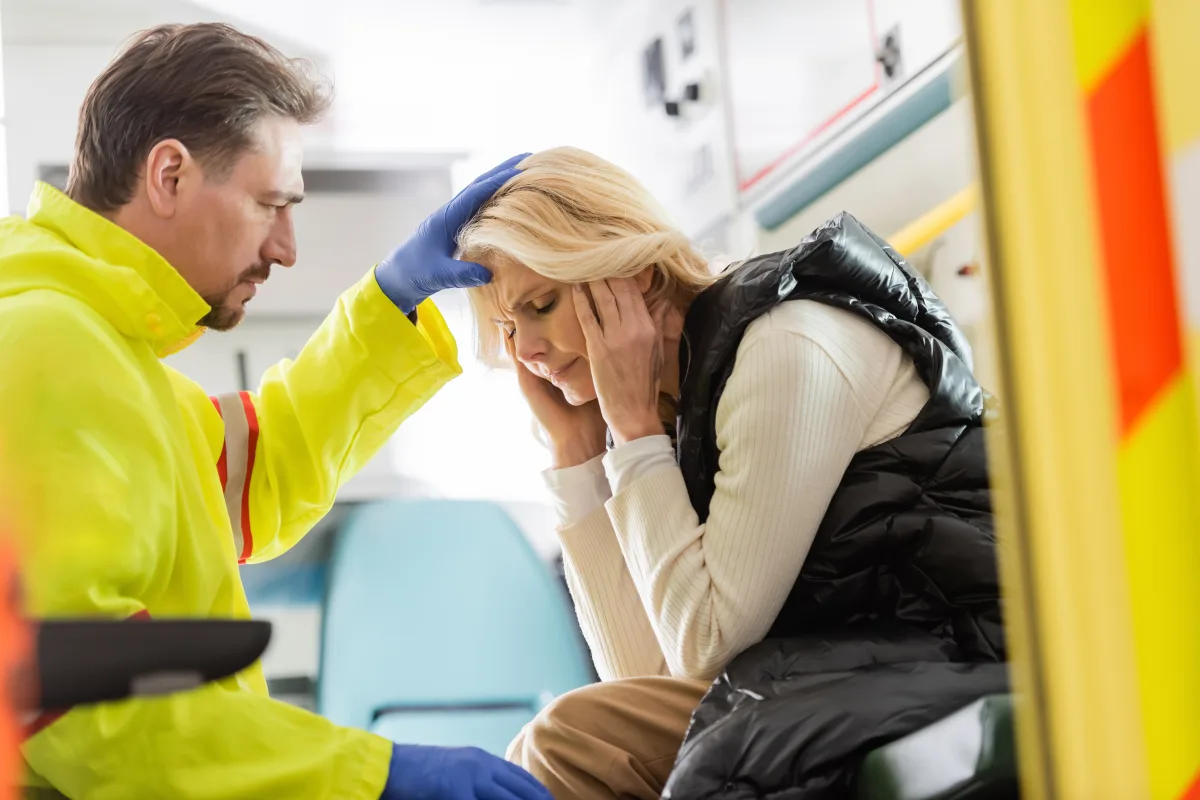
"Is there a doctor on board?" — What happens next: onboard medical kit, defibrillator, telemedicine, diversion decisions, and legal protection for helping physicians.
Medical Emergency On Board — What Really Happens
Medical emergencies in the air are among the situations that pose particular challenges for both passengers and crew members alike. Far from any hospital, in a pressurized cabin at 35,000 feet, with limited medical equipment — and yet these events are managed surprisingly well thanks to well-designed systems, trained crew members, and ground-based telemedicine.
How Common Are Medical Emergencies On Board?
Medical events in the air are not uncommon:
- Approximately one medical event per 600 flights requires the attention of the cabin crew.
- For large airlines with hundreds of daily flights, this means multiple incidents per day.
- Only a small fraction of these events is life-threatening — most are minor complaints such as nausea, dizziness, or anxiety attacks.
- Approximately 7 to 10 percent of all medical events lead to a flight diversion.
- The mortality rate for medical emergencies on board is less than 0.3 percent — remarkably low considering the limited resources available.
The Most Common Medical Emergencies
| Emergency Type | Proportion of All Incidents | Typical Measures |
|---|---|---|
| Syncope (Fainting) | approx. 33% | Lay flat, elevate legs, fluids, monitoring |
| Gastrointestinal Complaints | approx. 15% | Nausea, vomiting — medication, fluids |
| Cardiac Events | approx. 12% | AED deployment, oxygen, nitroglycerin, possible diversion |
| Respiratory Problems | approx. 10% | Oxygen, bronchodilators, upright position |
| Seizures | approx. 6% | Clear area, protect from injury, recovery position |
| Allergic Reactions | approx. 4% | Antihistamines; in case of anaphylaxis, epinephrine (adrenaline) |
| Psychiatric Crises | approx. 3% | Calming, isolation, restraint if necessary |
| Injuries | approx. 5% | Wound care, splinting, cooling |
| Other | approx. 12% | Diabetic emergencies, suspected stroke, childbirth |
Medical Equipment On Board
EASA (European Union Aviation Safety Agency) and the FAA (Federal Aviation Administration) mandate a minimum level of medical equipment on board. Many airlines voluntarily exceed these requirements.
First Aid Kit
Every aircraft carries at least one First Aid Kit, which may be used independently by the cabin crew:
- Bandages, dressings, adhesive plasters
- Disposable gloves
- Antiseptic solution
- Thermometer
- Scissors and tweezers
- Blood pressure cuff and stethoscope
- Mouth-to-mouth resuscitation mask
- Eye wash solution
Enhanced First Aid Kit
In addition to the basic kit, the enhanced kit contains:
- Oropharyngeal airway (Guedel tube) for airway management
- Oxygen mask with reservoir
- Blood pressure cuffs in various sizes
- Pulse oximeter
- Blood glucose meter
Emergency Medical Kit
This kit may only be opened and used by a physician or medically qualified personnel:
- Medications: Epinephrine (adrenaline), atropine, nitroglycerin, antihistamines, bronchodilators, analgesics, glucose, antiemetics, diuretics
- Instruments: Syringes, needles, infusion sets, intravenous catheters
- Infusion Solutions: Normal saline (NaCl 0.9%)
- Airway Management: Endotracheal tube, laryngoscope
- Obstetric Kit: For emergency deliveries on board
AED (Automated External Defibrillator)
Since the early 2000s, an AED has been mandatory on virtually all commercial aircraft, as required by both EASA and FAA regulations. This device can be operated by any crew member — and theoretically by any passenger:
- Automatic heart rhythm analysis
- Voice-guided instructions in multiple languages
- Shock delivery only for shockable rhythms (ventricular fibrillation, pulseless ventricular tachycardia)
- Proven to save lives — multiple documented cases of successful defibrillation on board
Why Epinephrine Is On Board
Epinephrine (adrenaline) is one of the most important medications in the emergency kit. It is used for:
- Anaphylactic Shock: Severe allergic reactions that can become life-threatening within minutes — triggered by food, insect stings, or medications.
- Severe Asthma Attack: When bronchodilators are insufficient.
- Cardiac Arrest: As part of advanced resuscitation.
Without epinephrine, an anaphylactic reaction in the air would be potentially fatal, as no ambulance is available within minutes. This single medication has already saved countless lives on board.
Telemedicine — The Physician on the Ground
Modern airlines rely on ground-based medical advisory services available around the clock. The best-known providers include:
- MedAire / MedLink: The world's largest provider, used by over 100 airlines. Based in Phoenix, Arizona.
- STAT-MD: Operated by the University of Pittsburgh Medical Center.
- Medic'Air International: A European provider based in France.
The process during a telemedicine consultation:
- The cabin crew or a helping physician on board contacts the service via satellite telephone or ACARS datalink.
- An experienced emergency physician on the ground evaluates the symptoms based on the transmitted information (vital signs, symptom description, medical history).
- The ground physician provides therapy recommendations and advises on the necessity of a flight diversion.
- All decisions are documented — both for medical follow-up and for legal purposes.
These services are staffed 24 hours a day, 365 days a year and handle tens of thousands of requests annually.
"Is There a Doctor On Board?" — What Happens Next
The famous PA announcement "Is there a doctor on board?" is more than a movie cliche — it is a standardized procedure:
- The announcement is made when the cabin crew assesses that the situation exceeds their own competence.
- Helpers frequently come forward: Statistics show that on every third to fourth flight, a physician, paramedic, or nurse is among the passengers.
- Identity Verification: The crew asks the assisting physician for identification or professional credentials.
- Access to the Emergency Medical Kit: Only qualified medical personnel may open the advanced emergency kit and use the medications and instruments contained within.
- Documentation: The assisting physician completes a medical form documenting the measures taken and the patient's condition.
Legal Protection for Assisting Physicians
A common concern among physicians who help on board: "What happens if something goes wrong? Will I be sued?" The answer is reassuring in most legal systems:
| Jurisdiction | Regulation |
|---|---|
| USA | Aviation Medical Assistance Act (1998) — Protection from liability for helpers, provided there is no gross negligence |
| EU | Good Samaritan principle — Liability protection in most EU states for voluntary emergency assistance |
| Germany | Section 323c of the Criminal Code (StGB) even requires rendering assistance — failure to render assistance is a criminal offense |
| Canada | Provincial Good Samaritan Acts protect voluntary helpers |
| Australia | Civil Liability Acts provide protection for emergency responders |
Many airlines additionally offer assisting physicians liability insurance for the duration of their assistance on board. Some airlines also express gratitude with frequent flyer miles, upgrades, or personal thank-you letters.
The Decision to Divert
When a medical emergency exceeds the capabilities on board, a critical decision must be made: should the aircraft divert? This decision rests with the captain, who weighs several factors:
- Severity of the Medical Condition: Life-threatening situations (heart attack, stroke, severe hemorrhage) require immediate diversion.
- Ground Physician's Recommendation: MedLink/STAT-MD provides a clear recommendation on whether a diversion is medically necessary.
- Recommendation of the Assisting Physician On Board: If present, their assessment is taken into account.
- Availability of Suitable Airports: Not every airport has a nearby hospital with the necessary facilities.
- Fuel Situation: Is there sufficient fuel for the alternate airport? Does fuel need to be jettisoned (fuel dump)?
- Weather Conditions: Is a safe landing possible at the alternate airport?
- Landing Weight: On long-haul aircraft, the current weight may exceed the maximum landing weight — then fuel must either be jettisoned or an overweight landing performed.
A flight diversion typically costs the airline $50,000 to $200,000 (fuel, airport fees, delay costs, passenger accommodation). Nevertheless, at any suspicion of a life-threatening situation, diversion is initiated without hesitation. Patient safety always takes precedence over financial considerations.
Landing Priority During Medical Emergencies
An aircraft with a medical emergency receives landing priority from air traffic control. This means:
- Priority over other traffic in the approach sequence
- Direct approach without holding patterns
- Emergency medical services standing by at the taxiway upon landing
- Customs and border formalities expedited or deferred
What Passengers Can Do
Even without medical training, passengers can help during an emergency:
- Make Room: Clear the aisle and the area around the affected person.
- Stay Calm: Avoid panic and agitation — this helps both the affected person and the crew.
- Provide Information: If you know the affected person or observed something, share relevant information (e.g., "He mentioned earlier that he is diabetic").
- Follow Instructions: If the crew asks you to move from your seat or hold a privacy screen, follow these instructions.
- Report Medical Qualifications: If you are a physician, nurse, paramedic, or otherwise medically qualified — come forward. Every bit of help counts.
- Respect Privacy: Do not film or photograph. The affected person deserves dignity.
Airline Medical Advisory Services
Many major airlines maintain their own medical departments that go beyond pure emergency consultation:
- Pre-Flight Medical Clearance: Passengers with known medical conditions can obtain medical clearance before the flight (MEDIF form — as specified by IATA).
- Fitness-to-Fly Advice: After surgeries, heart attacks, or other medical conditions, airline physicians advise when flying is safe again.
- Supplemental Oxygen Provision: For passengers who require additional oxygen due to pulmonary conditions, special devices can be arranged on board.
- Medical Escort: For particularly vulnerable patients, a medical escort can be organized.
Statistical Outcomes and Survival Rates
The outcomes of medical emergencies on board are better than often assumed:
- Over 90 percent of all medical events are successfully managed on board without the need for a diversion.
- For cardiac events with AED deployment, the survival rate is significantly higher than for comparable events on the ground — because the AED is immediately available, rather than after an 8-to-12-minute ambulance response time.
- The combination of immediate recognition by trained crew, rapid telemedicine consultation, and the option of flight diversion creates a remarkably effective safety net at 35,000 feet.
Notable Cases and Outcomes
Aviation medicine has documented numerous remarkable cases:
- Successful Resuscitation Over the Atlantic: Multiple documented cases in which passengers were revived after cardiac arrest through AED deployment and CPR on board and made full recoveries after landing.
- Emergency Birth on Long-Haul Flight: Births on board are rare but do occur. Most proceed without complications. The fascinating question of the child's citizenship depends on the overflown territory and the airline's flag state.
- Surgical Procedures: In extreme cases, physicians on board have performed procedures with improvised instruments — such as relieving a tension pneumothorax (collapsed lung) using a repurposed cannula and a water glass.
Conclusion — A System That Works
A medical emergency on board is a serious situation, but not a hopeless one. The interplay of trained cabin crew, standardized medical equipment, 24/7 telemedicine, and the willingness to divert forms a safety net that works in the vast majority of cases. Aviation has learned from every experience and continuously improved its systems. When you fly, you fly with the knowledge that medical emergencies are planned for — better than in most public spaces on the ground.
Safety First
Flying is the safest mode of transport in the world — thanks to decades of experience, cutting-edge technology and the strictest regulations. Knowledge builds trust: The more you understand about aviation safety, the more relaxed you fly.
