
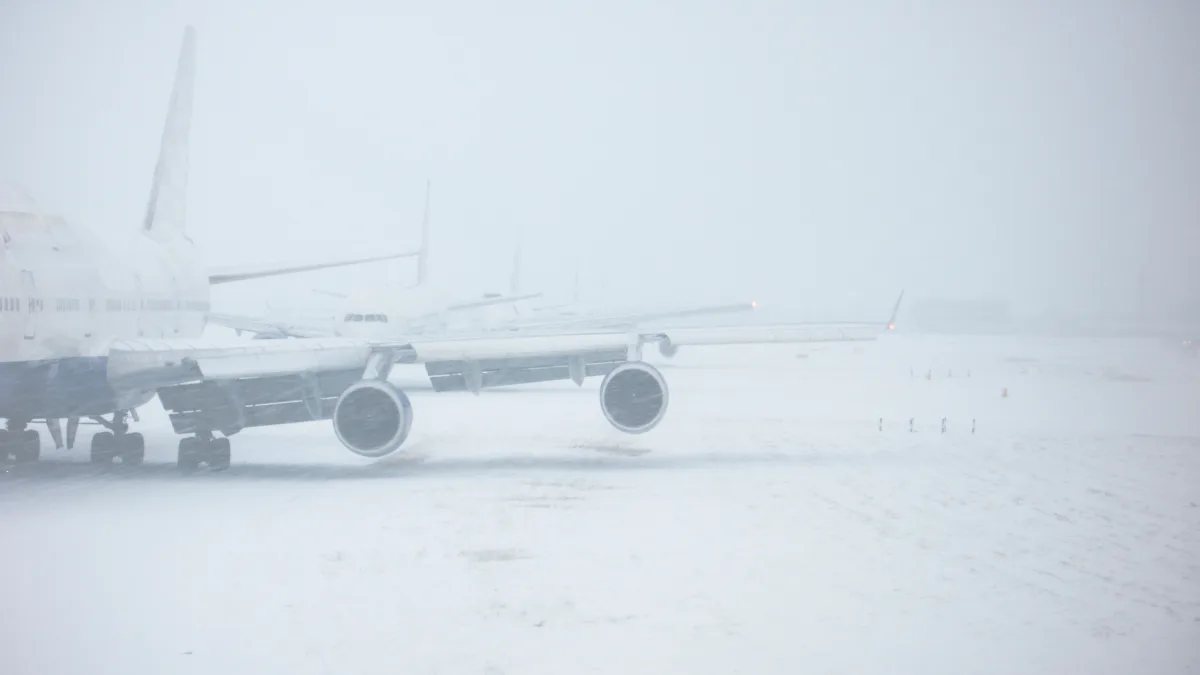
Weather assessment, personal limits, the IMSAFE checklist, and why "get-there-itis" is every pilot's most dangerous enemy.
The Go/No-Go Decision -- The Most Important Moment Before Every Flight
No checklist item in the cockpit is as significant as the decision whether or not to conduct a flight. The Go/No-Go decision stands at the beginning of every flight and is simultaneously the last line of defense against a chain of errors that can lead to catastrophe. The overwhelming majority of all fatal accidents in General Aviation (GA) could have been prevented if the pilot had made the right decision before takeoff -- namely, to stay on the ground.
This article explains the systematic methods professional pilots use to make this critical decision, the psychological traps that lurk along the way, and why a "No-Go" is never the wrong decision.
Why the Go/No-Go Decision Is So Difficult
At first glance, the matter seems simple: if conditions are unsafe, you do not fly. In practice, however, it is far more complicated. Humans are masters of self-deception, especially when they desperately want to achieve something. Pilots invest time, money, and emotional energy into a planned flight. They may have passengers waiting expectantly, appointments that need to be kept, or simply the desire to finally fly home after a long day.
It is precisely in this tension between rational analysis and emotional pressure that the Go/No-Go decision is made. And it is precisely here that even experienced pilots fail time and again -- with fatal consequences.
Legal Minimums vs. Personal Minimums
Every pilot knows the legal weather minimums for VFR flights: In Europe, under EASA regulations, visual flight requires a minimum flight visibility of 5 km (under certain conditions 1,500 m), a distance from clouds, and a ceiling that safely permits the flight. In the United States, the FAA sets similar VFR minimums under 14 CFR Part 91. However, these legal minimums are exactly that -- absolute lower limits designed for the most experienced pilot under optimal conditions.
A responsible pilot sets personal weather minimums that are well above the legal requirements. These personal minimums take into account:
- Experience level: A pilot with 100 flight hours should have different minimums than one with 5,000 hours.
- Route familiarity: A known flight path with familiar terrain allows lower minimums than an unfamiliar route.
- Aircraft type: A single-engine aircraft without de-icing equipment requires higher minimums than a multi-engine IFR-certified type.
- Currency: Anyone who has not flown for three months should raise their minimums.
- Time of day: Night flights require stricter minimums than daytime flights.
| Experience Level | Recommended Flight Visibility | Recommended Ceiling |
|---|---|---|
| Newly certified PPL holder | 10 km (6 SM) or more | 3,000 ft AGL or higher |
| 100-300 flight hours | 8 km (5 SM) or more | 2,500 ft AGL or higher |
| 300-1,000 flight hours | 5-8 km (3-5 SM) | 2,000 ft AGL or higher |
| Experienced VFR pilot (1,000+ h) | 5 km (3 SM) | 1,500 ft AGL |
Professional pilots write down their personal minimums and record them in writing -- before they drive to the airport. This way, the decision is made in a rational state of mind rather than under the pressure of the situation at the airfield.
The IMSAFE Checklist -- Am I Fit to Fly?
Before a pilot evaluates the weather, they must evaluate themselves. The IMSAFE checklist is the standard tool for this purpose and is taught in pilot training worldwide by both the FAA and EASA:
| Letter | Meaning | Question to Ask Yourself |
|---|---|---|
| I | Illness | Do I feel physically well? Do I have any cold symptoms? |
| M | Medication | Am I taking any medications that could impair my fitness to fly? |
| S | Stress | Am I experiencing unusual stress? Is something weighing heavily on me? |
| A | Alcohol | Have I consumed alcohol in the last 8-24 hours? |
| F | Fatigue | Have I had enough sleep? Am I well rested? |
| E | Eating | Have I eaten and hydrated adequately? |
Any single point can render a pilot unfit to fly. Fatigue is particularly insidious: studies show that 17 hours without sleep cause cognitive impairment equivalent to a blood alcohol concentration of 0.05%. After 24 hours without sleep, the impairment is equivalent to 0.10% -- a level at which no person should operate a vehicle, let alone an aircraft.
The PAVE Checklist -- Systematically Assessing All Risks
While IMSAFE concerns the pilot personally, the PAVE checklist expands the risk analysis to all relevant factors of a flight:
- P -- Pilot: Experience, currency, physical and mental condition (see IMSAFE), familiarity with the aircraft type and the route.
- A -- Aircraft: Is the aircraft technically airworthy? Is its performance adequate for the planned route (density altitude, runway length, payload)? Are all required instruments serviceable?
- V -- enVironment: Current and forecast weather conditions, terrain along the route, aerodrome peculiarities, night flight, airspace structure.
- E -- External Pressures: Time pressure, passenger expectations, professional obligations, emotional pressure ("I have to get there").
If even one element of the PAVE checklist shows an elevated risk, the pilot should exercise particular caution. If two or more elements are problematic, a No-Go is the safe decision.
"Get-there-itis" -- The Deadliest Disease in Aviation
"Get-there-itis" is the informal term for one of the most dangerous psychological traps in aviation: the overwhelming urge to reach the destination regardless of deteriorating conditions. Psychologists call this Plan Continuation Bias -- the tendency to continue with an established plan even when new information argues against it.
The mechanisms behind it are well researched:
- Sunk-cost fallacy: "I have already invested so much time and money; I might as well fly the last 50 miles."
- Confirmation bias: Seeking information that justifies continuing the flight while ignoring warning signs.
- Overconfidence: "I am a good pilot; I can handle it."
- Social pressure: "My passengers expect me to get them safely to the destination -- what will they think if I turn back?"
- Normalization of deviance: "It barely worked out last time, so it will work out again this time."
Get-there-itis is not a weakness of inexperienced pilots -- it affects professionals as well. The critical difference is that professional pilots have systems and procedures in place to defuse this psychological trap: fixed personal minimums, Crew Resource Management, and a corporate culture that rewards No-Go decisions rather than penalizing them.
Aeronautical Decision Making (ADM) -- The Professional Decision Model
Aeronautical Decision Making (ADM) is the systematic approach to decision-making in aviation. Both the FAA (AC 60-22) and EASA have established ADM as an integral part of pilot training, recognizing that technical skill alone is insufficient -- most accidents are caused by poor decisions, not by a lack of flying ability.
The ADM model comprises several steps:
- Recognize the situation: What is happening right now? What information do I have? What do I not know?
- Assess the risk: How high is the risk? What are the possible consequences?
- Identify options: What courses of action are available? (There is always more than one.)
- Make a decision: Which option offers the lowest risk with acceptable effort?
- Act: Implement the decision.
- Review: Was the decision correct? Do I need to adjust?
A central element of ADM is recognizing hazardous attitudes that lead to poor decisions. The FAA identifies five such attitudes:
| Hazardous Attitude | Typical Statement | Antidote |
|---|---|---|
| Anti-Authority | "The rules don't apply to me." | Rules exist for good reason -- often paid for with human lives. |
| Impulsivity | "Quick, do something!" | The first reaction is not always the best. Think, then act. |
| Invulnerability | "It won't happen to me." | It can happen to anyone. Including you. |
| Macho | "I'll show them I can do it." | Taking unnecessary risks proves nothing except poor judgment. |
| Resignation | "What's the point? I can't change anything." | Yes, you can. You are the pilot. You always have a choice. |
VFR-into-IMC -- The Number One Killer
VFR-into-IMC (Visual Flight Rules into Instrument Meteorological Conditions) is the most common fatal accident cause in General Aviation worldwide. It occurs when a pilot flying under visual flight rules enters weather conditions that require instrument flight -- without the corresponding rating, training, or equipment.
The statistics are alarmingly clear:
- Lethality: Approximately 75-80% of all VFR-into-IMC accidents are fatal -- one of the highest fatality rates of any accident category.
- Survival time: A pilot without an instrument rating loses control of the aircraft in IMC conditions on average within 178 seconds -- barely three minutes.
- Frequency: Although VFR-into-IMC accounts for only about 4% of all GA accidents, it is responsible for approximately 16% of all fatal GA accidents.
The typical VFR-into-IMC accident follows a frighteningly predictable pattern: The pilot departs in acceptable conditions. En route, the weather gradually deteriorates. Instead of turning back, the pilot flies lower and lower to stay beneath the clouds. Eventually, visibility is so poor that the pilot can no longer reliably see the horizon or the ground. Without visual references, the pilot loses spatial orientation. The aircraft enters an unusual attitude -- typically a graveyard spiral -- and impacts terrain or water.
Tragic Examples: JFK Jr. and Kobe Bryant
Two of the most well-known victims of Go/No-Go decision failures are John F. Kennedy Jr. and Kobe Bryant.
JFK Jr. -- July 16, 1999: John F. Kennedy Jr. flew his Piper Saratoga from New Jersey to Martha's Vineyard. He had only 310 total flight hours, of which just 72 hours were as sole pilot of a high-performance aircraft. He did not hold an instrument rating. The weather was hazy, and visibility deteriorated rapidly over the water, where there were no visual reference points. Kennedy lost spatial orientation and crashed into the Atlantic with his wife and sister-in-law. The NTSB determined the cause as: "The pilot's failure to maintain control of the airplane during a descent over water at night, which was a result of spatial disorientation."
The tragic irony: Had Kennedy simply said "No-Go" and flown the next morning in better conditions or chosen an alternative means of travel, three people would still be alive.
Kobe Bryant -- January 26, 2020: The Sikorsky S-76B helicopter transporting NBA legend Kobe Bryant and eight other people crashed in poor weather in the hills of Calabasas, California. The experienced pilot Ara Zobayan was flying under VFR in increasingly deteriorating visibility. He climbed into the clouds, lost orientation, and impacted a hillside. The NTSB determined that the pilot experienced "self-induced pressure" to get the high-profile passenger to his destination. The investigation also pointed to a corporate culture that placed informal pressure on pilots to complete flights.
Both cases demonstrate the same pattern: the pressure to reach the destination outweighs rational risk analysis.
How Professionals Make the Go/No-Go Decision
Professional pilots at airlines have structured systems that shift the Go/No-Go decision away from individual judgment and toward an objective process:
- Established dispatch minimums: Airlines have weather minimums defined in their Operations Manuals that cannot be undercut -- regardless of what the captain "could" do.
- Dispatcher system: At airlines, the flight is jointly planned by pilots and dispatchers. The dispatcher must approve the flight and monitors conditions throughout.
- Shared responsibility: Both the captain and the dispatcher can cancel a flight. Neither needs to overrule the other.
- No consequences for cancellation: In a professional safety culture, a pilot is never penalized for canceling a flight for safety reasons. On the contrary -- such decisions are viewed as a sign of professional competence.
- Threat and Error Management (TEM): Before every flight, pilots systematically identify all recognizable threats and plan countermeasures.
Passenger Pressure -- And How to Handle It
For private pilots, passenger pressure is one of the greatest challenges in making the Go/No-Go decision. Family, friends, or business partners often do not understand why a flight must be canceled because of "a few clouds." Here are some typical situations and how to handle them:
- "But the airlines are still flying!" -- Airlines fly IFR with fully equipped aircraft, two trained pilots, and comprehensive ground support. This is not comparable to a private flight.
- "We have the hotel reservation / the appointment / the dinner..." -- No appointment in the world is worth the risk. Hotels can be rebooked and appointments rescheduled.
- "The last pilot would have done it." -- If that is true, the last pilot made a poor decision. That does not change the current situation.
Experienced private pilots communicate their decision-making proactively: they explain to passengers before the flight that cancellation is always possible and that this is a sign of responsible decision-making, not a lack of skill.
"No-Go" Is Always the Right Decision
In the entire history of aviation, not a single accident has ever occurred because a pilot stayed on the ground. No person has ever died because a pilot said "No-Go." The consequences of a No-Go decision are always manageable: a missed appointment, an extra night in a hotel, an alternative means of travel. The consequences of a wrong Go decision, on the other hand, are potentially irreversible.
"There are old pilots and there are bold pilots. But there are no old, bold pilots." -- This saying from the early days of aviation has lost none of its validity to this day.
The Go/No-Go decision is the moment when a pilot demonstrates their professionalism, judgment, and responsibility toward themselves and their passengers. Every pilot should treat this decision with the same seriousness they give to every other safety-critical aspect of flying. Because ultimately, the ability to say "No" is the most important skill a pilot can have.
Practical Tips for Your Go/No-Go Decision
- Decide at home: Make the fundamental decision before you drive to the airport. The pressure is greater once you are at the airfield.
- Write down your minimums: Record your personal weather minimums in writing and adhere to them -- without exception.
- Use IMSAFE and PAVE: Go through both checklists systematically -- every time.
- Ask yourself: "Would a 10,000-hour pilot fly this?" If you hesitate, the answer is probably No.
- Always have a Plan B: Rental car, train, rebooking. Having a Plan B makes it easier to reach a rational decision.
- Talk to other pilots: Ask experienced pilots at the airfield for their assessment. A second pair of eyes often sees more.
- Accept that it is not a weakness. A No-Go decision is a sign of maturity and professionalism -- the same quality that airline pilots with tens of thousands of hours of experience demonstrate every day.
Safety First
Flying is the safest mode of transport in the world — thanks to decades of experience, cutting-edge technology and the strictest regulations. Knowledge builds trust: The more you understand about aviation safety, the more relaxed you fly.
